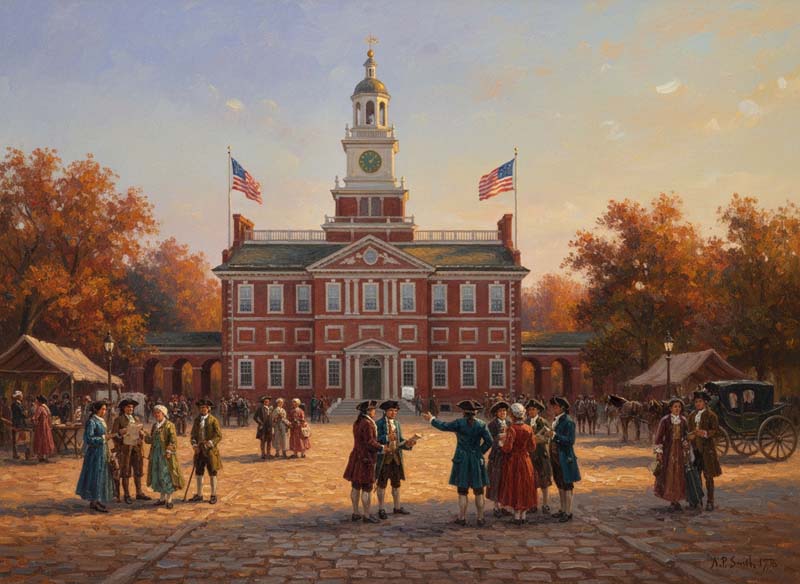
 Founding Era
The most important building in American history. The Declaration of Independence was debated and adopted here on July 4, 1776. Eleven years later, the Constitutional Convention met in the same room and produced the Constitution. Two documents, one room, 250 years of consequence.
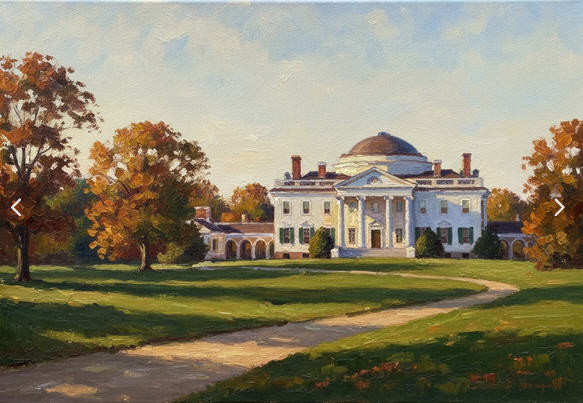 Founding Era
Thomas Jefferson designed, built, and rebuilt Monticello over 40 years — it is as close as architecture comes to a self-portrait. The estate tells the full story of Jefferson: his genius, his contradictions, his enslaved workers, and the ideals he proclaimed but could not live up to. A UNESCO World Heritage Site.
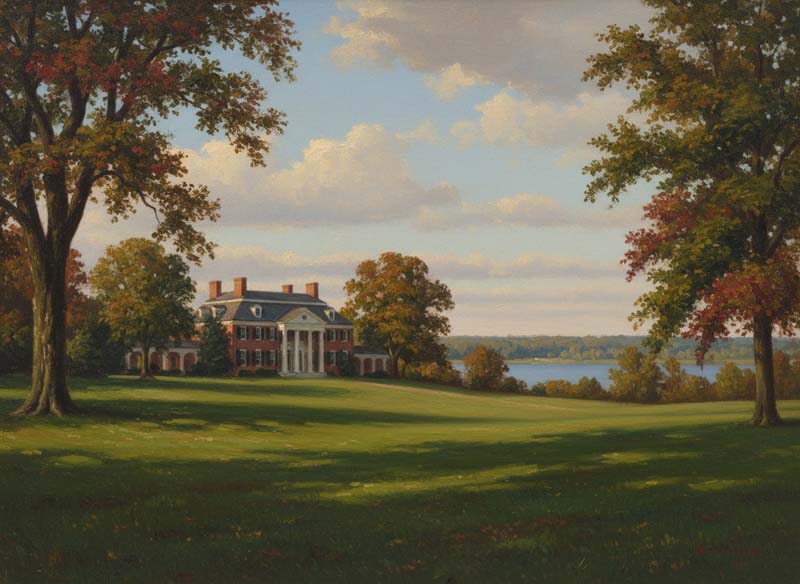 Founding Era
George Washington's home on the Potomac River, where he retreated after the Revolution and to which he returned to die in 1799. The estate has been meticulously restored and offers one of the most immersive founding-era experiences in America. Washington is buried here — the site draws more than a million visitors a year.
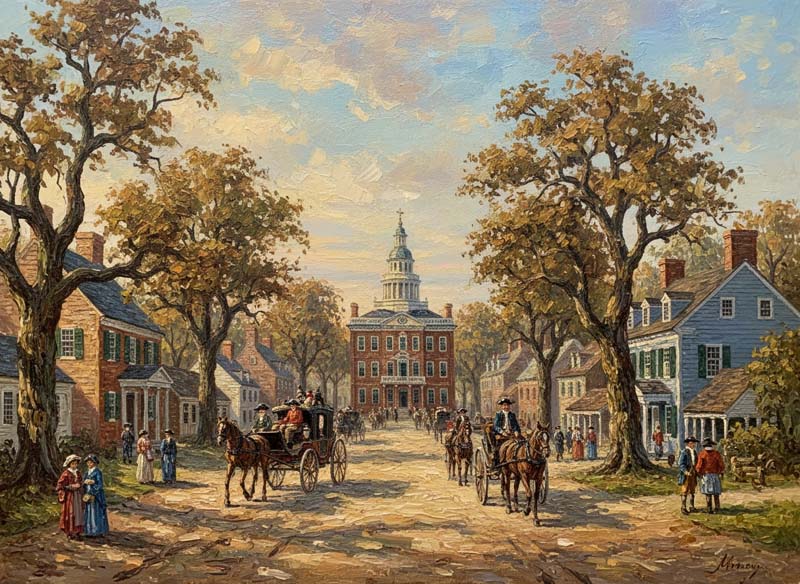 Founding Era
The largest living history museum in the world — an entire 18th-century colonial capital restored and staffed by costumed interpreters playing the roles of colonists, enslaved people, and tradespeople. It is the most immersive colonial experience in America, and one of the most historically honest.
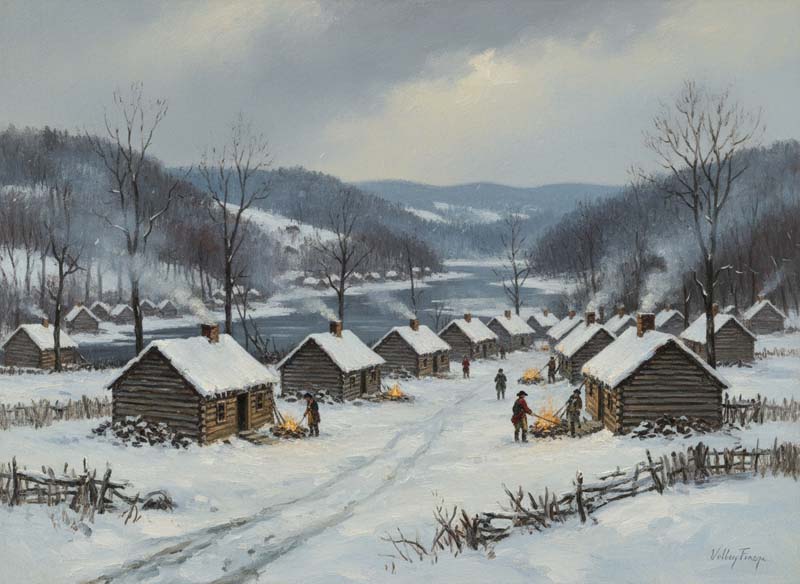 Revolution
Washington's Continental Army camped here during the brutal winter of 1777–78, suffering starvation, cold, and disease — and emerged in spring as a disciplined fighting force. Valley Forge is where the Revolution was nearly lost and, through sheer will, saved. It is the spiritual center of American military endurance.
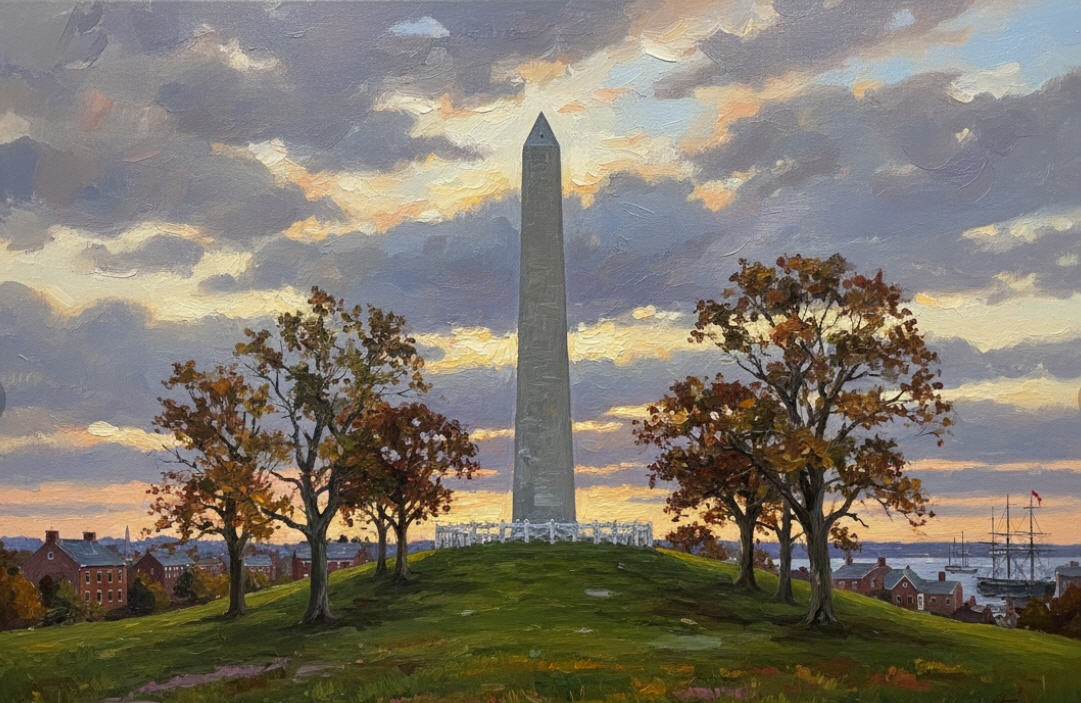 Revolution
The 221-foot granite obelisk marks the site of the first major battle of the American Revolution — June 17, 1775 — where colonial militia held off two British assaults before running out of ammunition. "Don't fire until you see the whites of their eyes" may be apocryphal, but the courage was not. The monument underwent major restoration for the 250th.
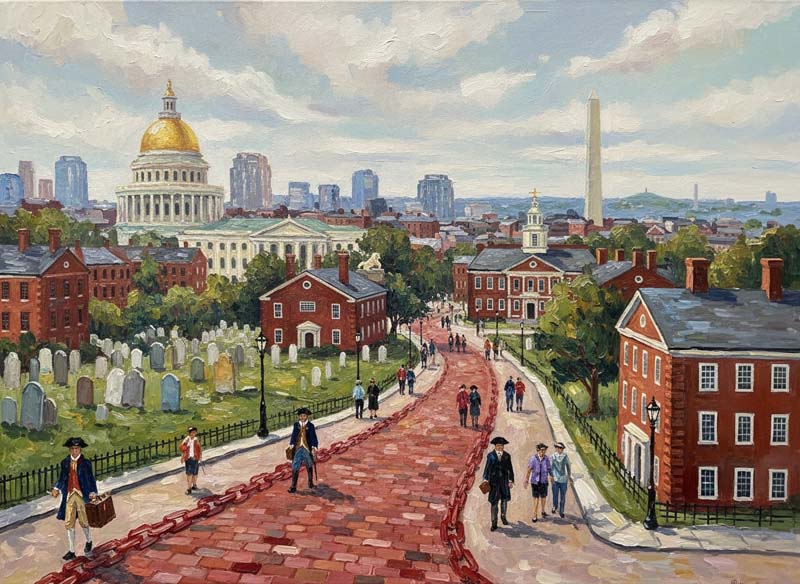 Revolution
A 2.5-mile red-brick path connecting 16 of the most significant Revolutionary War sites in America — from Boston Common to Bunker Hill — including the site of the Boston Massacre, Paul Revere's House, the Old North Church where lanterns signaled his ride, and the USS Constitution. One of the great historic walks in the world.
 Revolution
The last major battle of the American Revolution — where Cornwallis surrendered to Washington on October 19, 1781, ending the war and securing American independence. The surrender field, British redoubts, and Washington's headquarters are all preserved. Walking Yorktown is walking on the ground where the republic was won.
 Revolution
The turning point of the Revolutionary War — the American victory at Saratoga in October 1777 convinced France to enter the war on the American side, transforming what had been a colonial rebellion into a world war that Britain ultimately could not win. Called "the most decisive battle of the 18th century" by historian John Keegan.
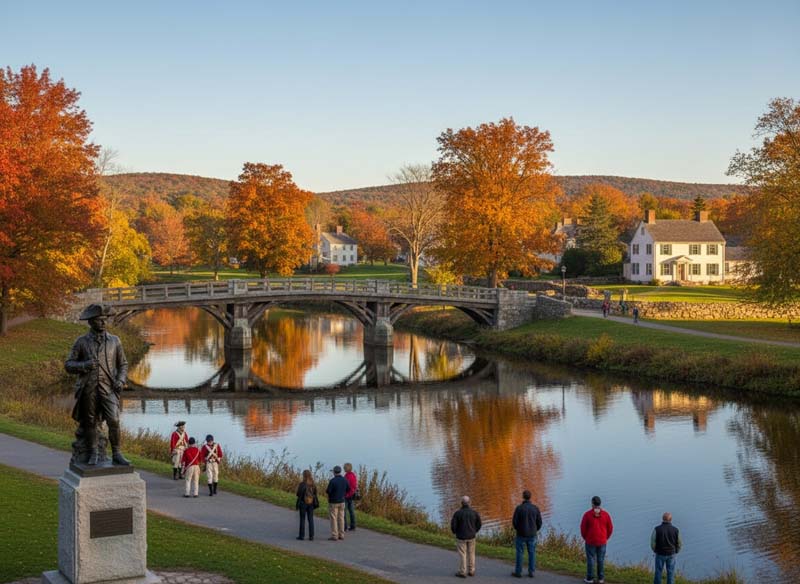 Revolution
The "shot heard round the world" — the first shots of the American Revolution — were fired at the North Bridge in Concord on April 19, 1775. The park preserves the landscapes of the battles of Lexington and Concord and the 5-mile Battle Road along which the Redcoats retreated under fire. Where the Revolution began.
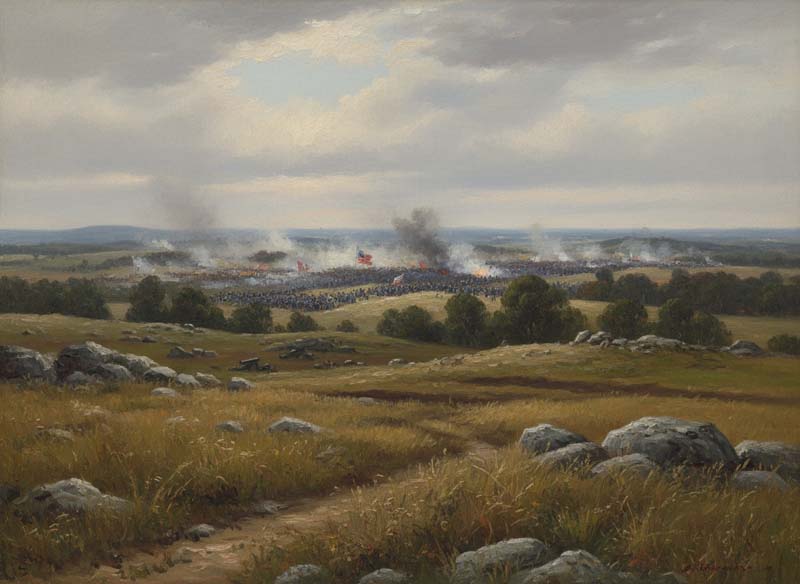 Civil War
The bloodiest battle in American history — 51,000 casualties over three days in July 1863 — and the one that turned the tide of the Civil War. Lincoln delivered the Gettysburg Address here four months later, redefining the purpose of the war and the meaning of the nation. Walking the ground at dawn is one of the most powerful experiences in America.
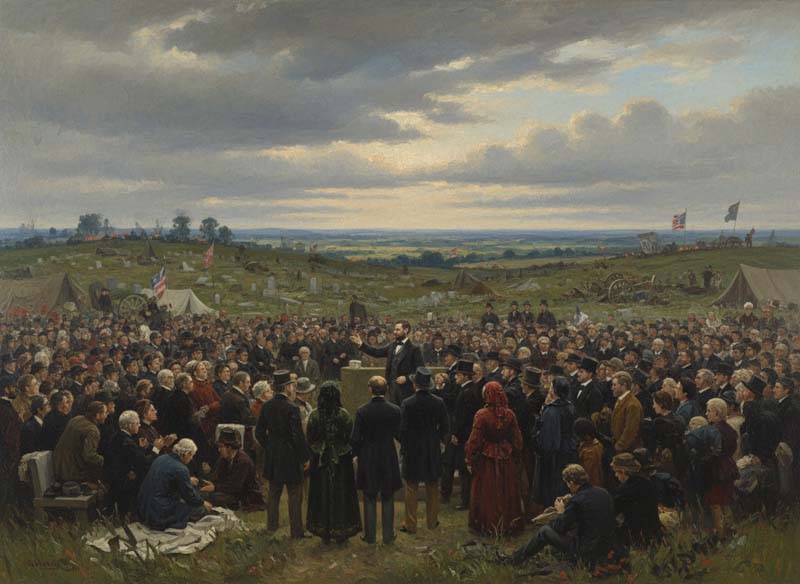 Civil War
Lincoln stood here on November 19, 1863 and delivered 272 words that redefined the Civil War as a struggle not merely to preserve the Union but to honor the proposition that all men are created equal. The cemetery contains the graves of 3,512 Union soldiers. The spot where Lincoln spoke is marked. Standing there in silence is something you never forget.
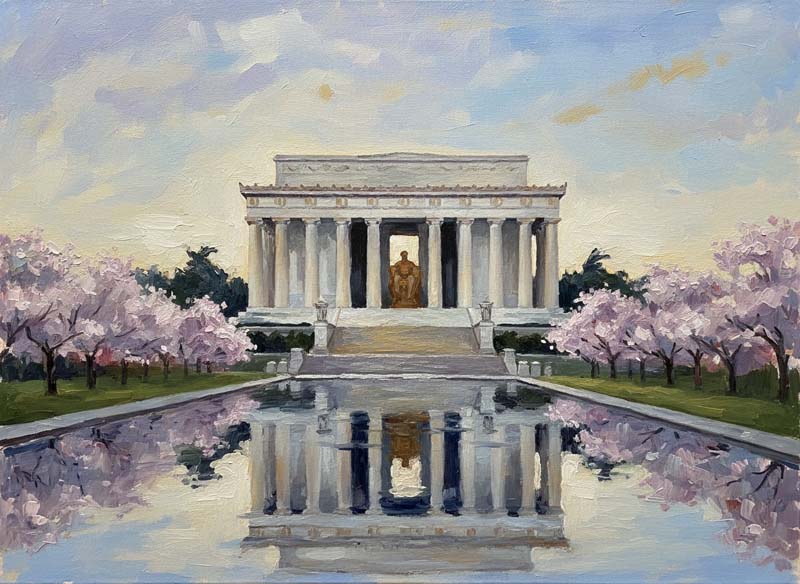 Memorial
The 19-foot seated Lincoln — the most powerful work of public sculpture in America — overlooks the Reflecting Pool toward the Washington Monument. Marian Anderson sang here in 1939 when the DAR barred her from Constitution Hall. Martin Luther King delivered "I Have a Dream" from these steps in 1963. It is where Americans go when they need to remember who they are.
 National Mall
Two miles of American history stretching from the Capitol to the Lincoln Memorial — the Washington Monument, the World War II Memorial, the Vietnam Wall, the Korean War Memorial, and a dozen Smithsonian museums flanking both sides. No single walk in America contains more history per step. On July 4, 2026, it becomes the center of the nation's 250th birthday celebration.
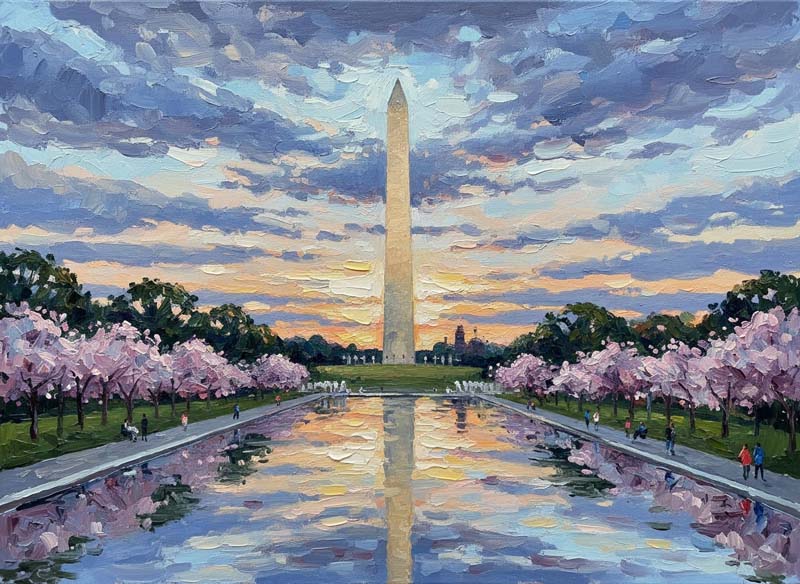 Memorial
At 555 feet, the world's tallest stone structure and the dominant feature of the Washington skyline. Construction began in 1848 — you can see where it stopped during the Civil War and resumed afterward in the slightly different-colored marble. The view from the top takes in the entire city. It was built to honor the man who made that city possible.
 Memorial
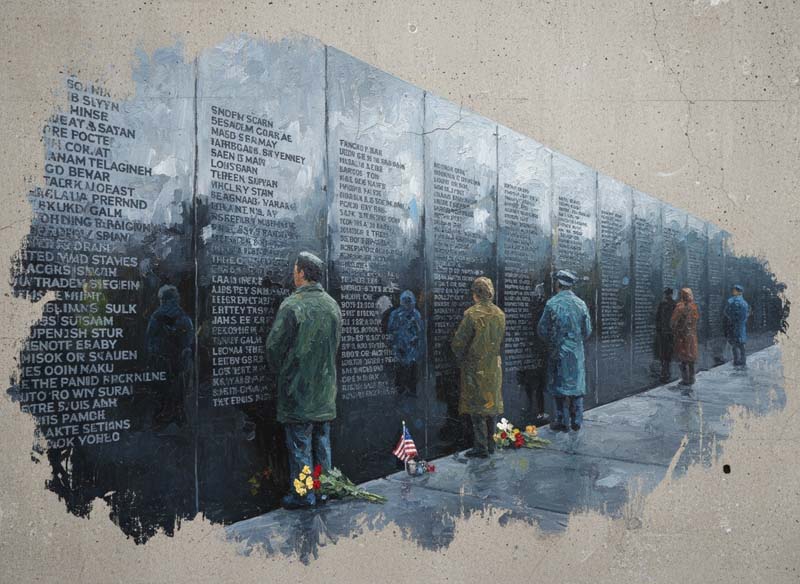
Maya Lin's design — two black granite walls descending into the earth, bearing the names of 58,318 Americans killed in Vietnam — was controversial when it opened in 1982 and is now considered the most powerful war memorial in the world. Visitors see their own reflection in the names. It is impossible to stand at the Wall without being moved.
 Memorial
More than 400,000 Americans are buried at Arlington — from the Revolutionary War to yesterday. The Tomb of the Unknown Soldier has been guarded continuously, 24 hours a day, every day since 1937. The changing of the guard is the most precise and moving military ceremony in America. John F. Kennedy is buried on the hillside, his eternal flame visible from across the river.
 Memorial
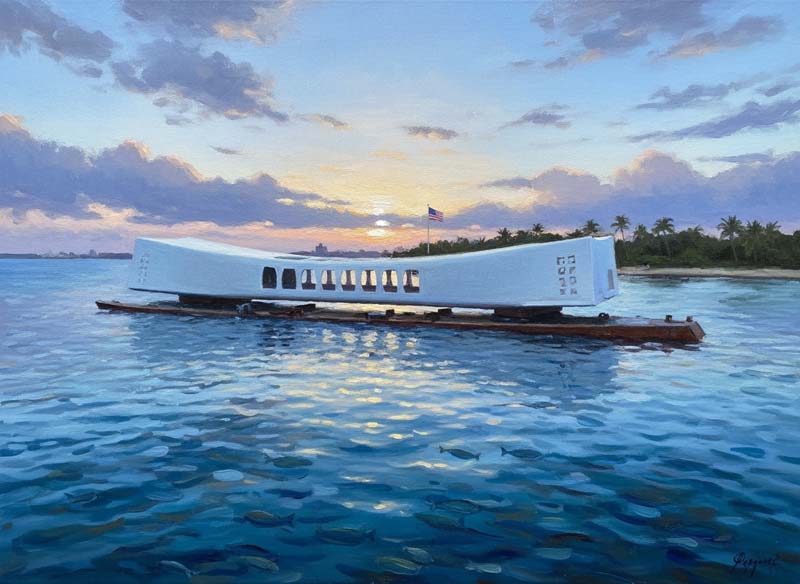
On December 7, 1941, a Japanese attack on Pearl Harbor killed 2,403 Americans and sank or damaged 19 Navy vessels including the USS Arizona, which still lies on the harbor floor with more than 900 of her crew entombed inside. The white marble memorial straddles the ship's hull. Oil still rises from the wreck — what visitors call "the tears of the Arizona."
 Memorial
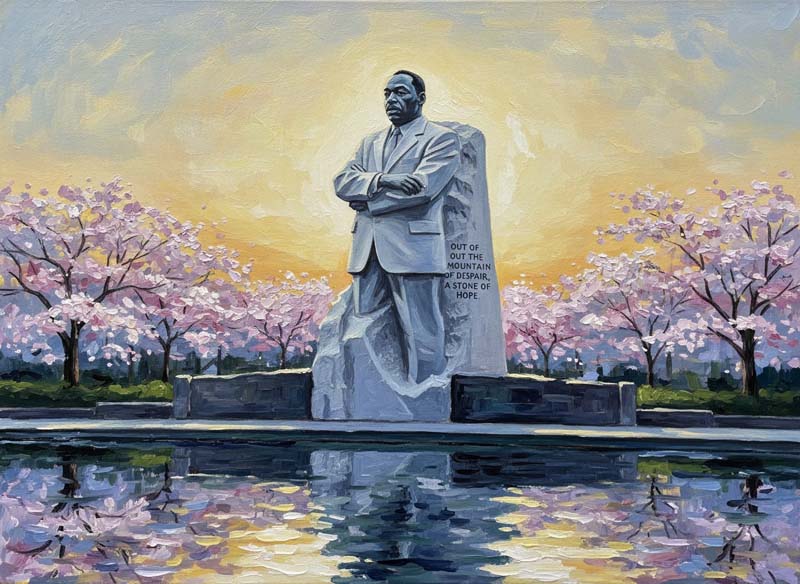
The 30-foot "Stone of Hope" — King emerging from a mountain of granite — stands on the Tidal Basin in the shadow of the Lincoln Memorial where he delivered his greatest speech. Fourteen of his quotes are carved into the Wall of Hope. The memorial opened in 2011 and is the first on the National Mall dedicated to a person who is not a U.S. president.
 Civil Rights
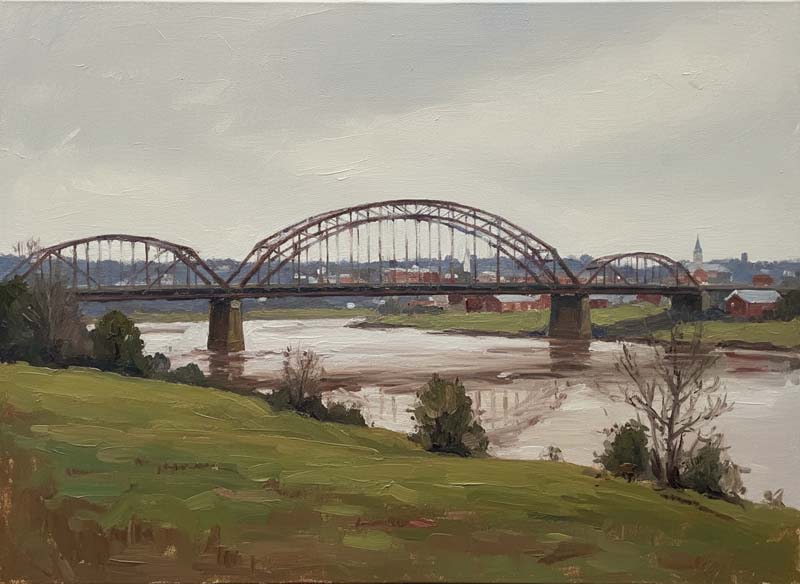
On March 7, 1965 — Bloody Sunday — 600 peaceful marchers attempting to walk from Selma to Montgomery were beaten by state troopers on this bridge. The images shocked the nation and accelerated passage of the Voting Rights Act of 1965. John Lewis, who led the march, called it "the most important moment in the history of the civil rights movement."
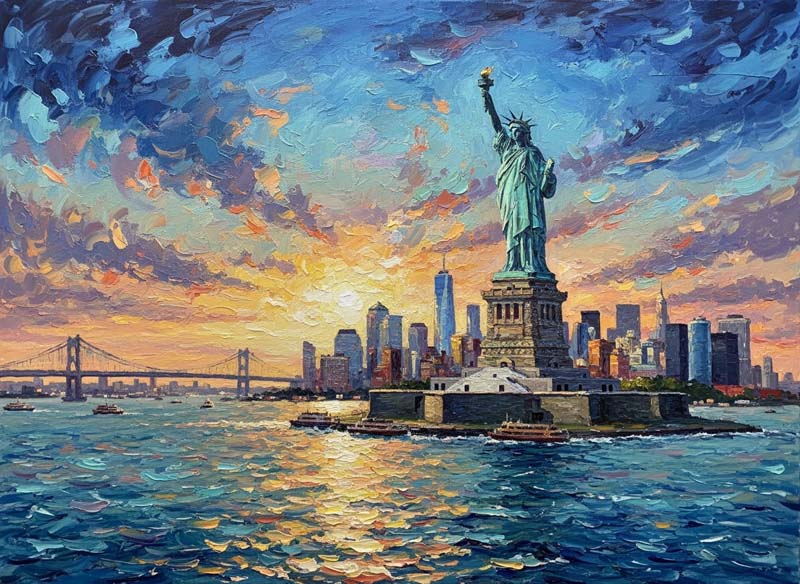
France's gift to the American people — dedicated in 1886 — stands 305 feet from base to torch tip in New York Harbor, welcoming every ship that enters. Emma Lazarus's poem inscribed at the base — "Give me your tired, your poor, your huddled masses yearning to breathe free" — has defined the American immigrant experience for 140 years.
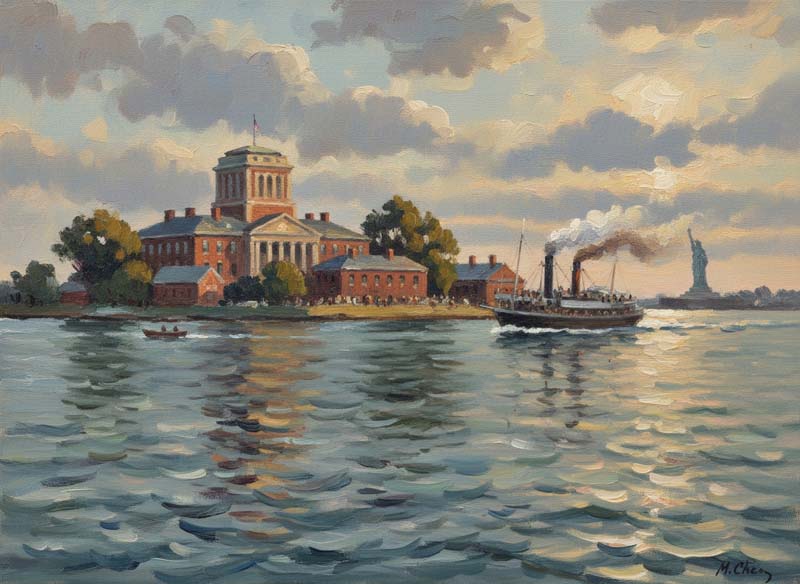
Between 1892 and 1954, more than 12 million immigrants passed through Ellis Island — the gateway to America for the largest mass migration in human history. More than 40% of Americans can trace their ancestry to someone who came through these doors. The National Museum of Immigration contains millions of passenger records searchable by name.
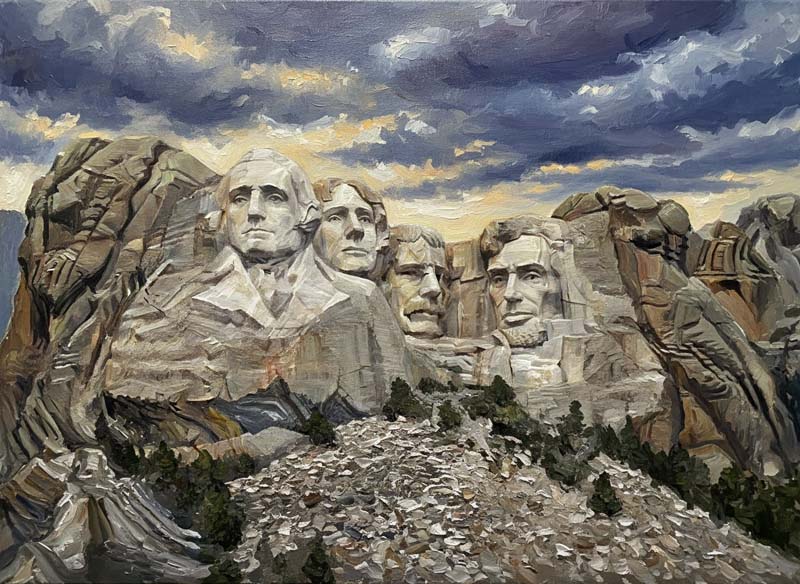
Carved into the granite of the Black Hills between 1927 and 1941, the 60-foot faces of Washington, Jefferson, Roosevelt, and Lincoln represent America's birth, growth, development, and preservation. The site sits on land sacred to the Lakota people — a fact the memorial now acknowledges. It draws nearly 3 million visitors a year and is the most recognized American landmark west of the Mississippi.
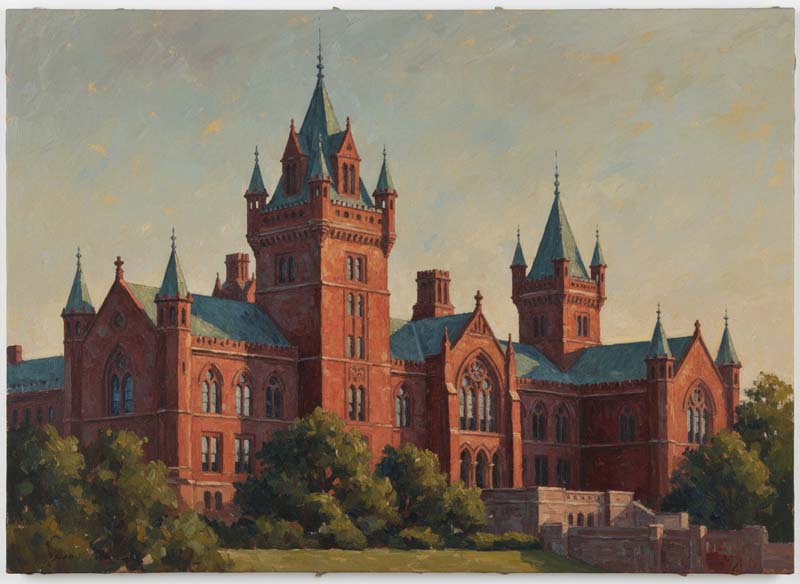
The world's largest museum and research complex — 19 museums and galleries housing 155 million objects, all free to the public, all on the National Mall. The original Wright Flyer, the Hope Diamond, Neil Armstrong's spacesuit, Julia Child's kitchen, and the original Star-Spangled Banner are all here. It is the nation's attic, its laboratory, and its greatest gift to its own citizens.

In February and March 1836, a small garrison of Texan defenders — including Davy Crockett and Jim Bowie — held the Alamo mission for 13 days against a Mexican army of thousands before being overwhelmed. Their sacrifice galvanized the Texas Revolution and produced one of the most enduring battle cries in American history: "Remember the Alamo!"