30 Inventions · 250 Years
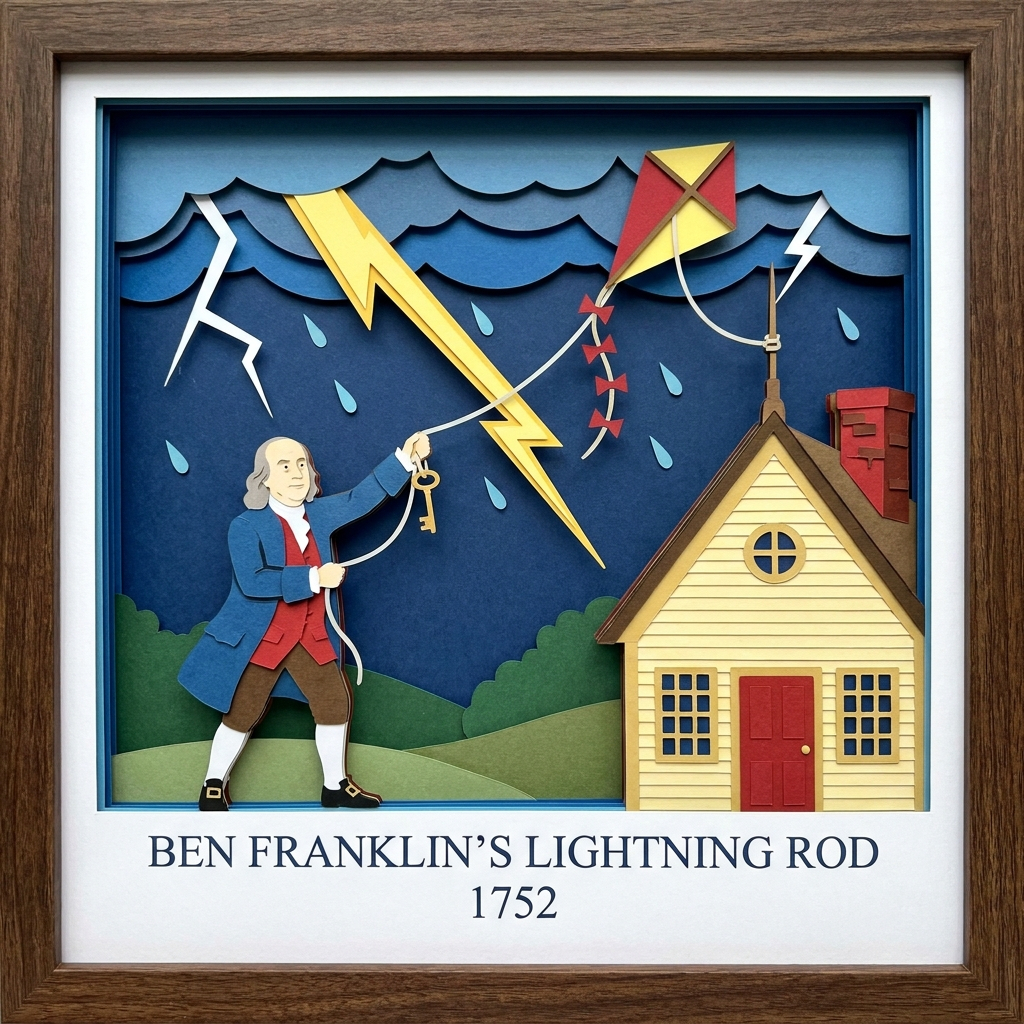
Lightning Rod
1752 · Benjamin Franklin
Founding Era
Franklin's experiments with electricity culminated in the lightning rod — a simple pointed metal conductor that drew lightning harmlessly into the ground instead of through buildings. Before its adoption, a single storm could burn down a city block. The device spread rapidly across Europe and the colonies, saving churches, powder magazines, and homes. It was the founding era's most dramatic proof that natural forces could be understood and controlled by human reason.
"The way to see by faith is to shut the eye of reason." — Benjamin Franklin
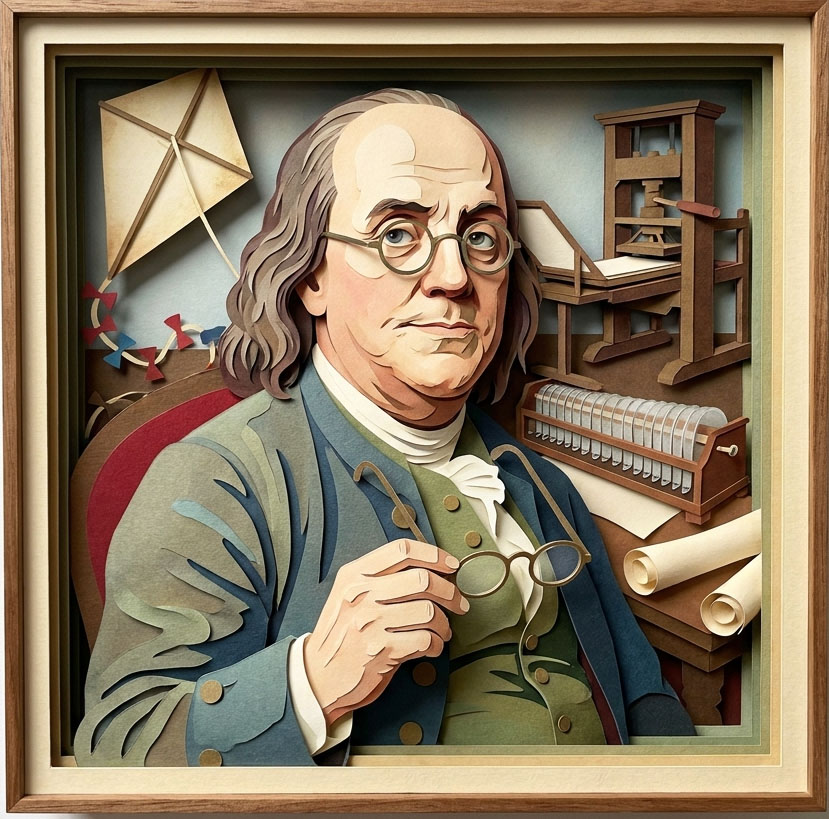
Bifocals
c. 1784 · Benjamin Franklin
Founding Era
Tired of switching between two pairs of glasses — one for reading, one for distance — Franklin had lenses cut in half and recombined in a single frame. The bifocal lens was a characteristically practical Franklin solution to an everyday irritation. He reportedly wore the first pair as early as 1784, though the design spread slowly. By the 20th century, bifocals and their successors became standard vision correction for aging eyes worldwide.
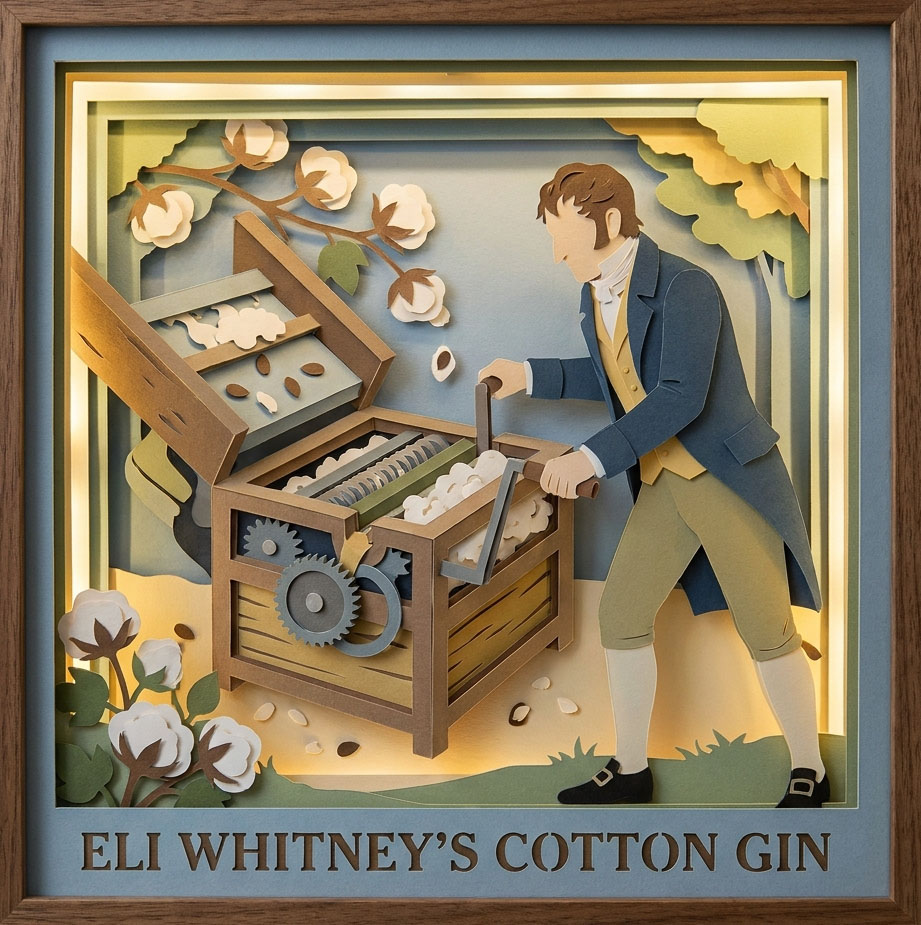
Cotton Gin
1793 · Eli Whitney
Founding Era
Whitney's mechanical cotton gin could clean as much cotton in a day as fifty workers by hand, transforming cotton from a marginal crop into the economic engine of the American South. The machine's consequences were profound and deeply contradictory: it drove an enormous expansion of American cotton production and commerce, but simultaneously entrenched chattel slavery as the labor system that made that production possible. The cotton gin is a study in how a single invention can reshape a civilization — for better and for worse.
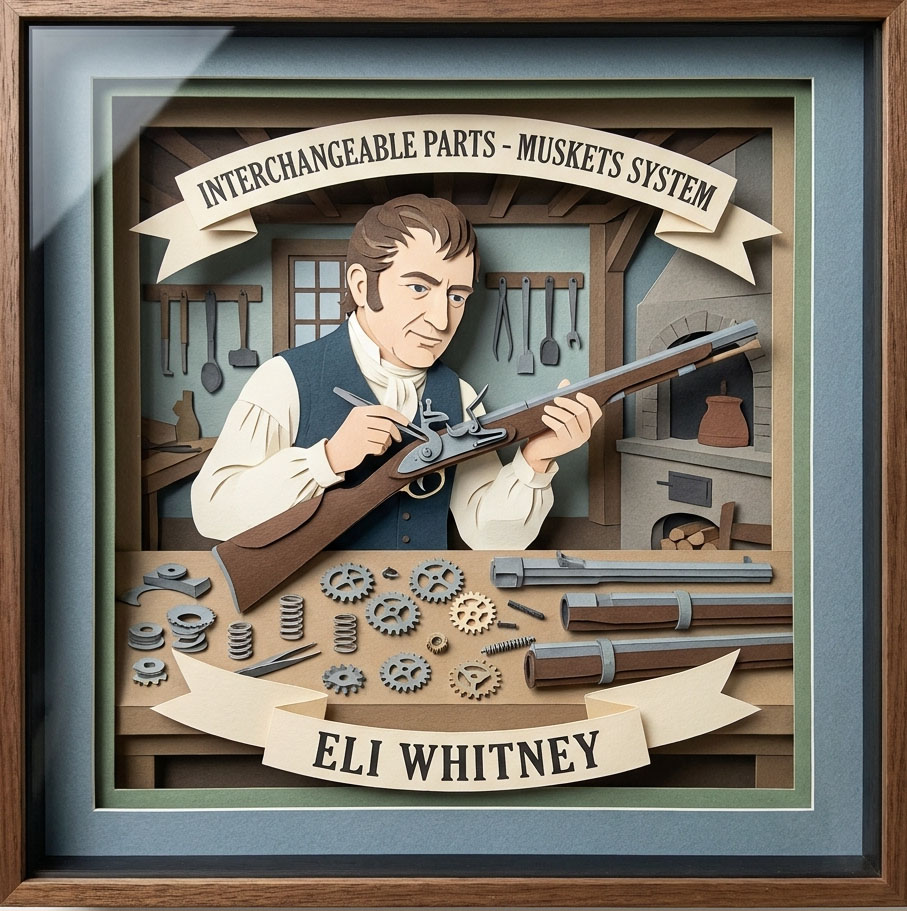
Interchangeable Parts
1798 · Eli Whitney
Founding Era
On a government contract to manufacture 10,000 muskets for the U.S. Army, Whitney advanced the concept of standardized, interchangeable parts — components made to such precise tolerances that any part from one gun could fit any other. The demonstration before President John Adams was a turning point: machines could now be repaired in the field by replacing parts rather than by skilled craftsmen. This principle became the foundation of mass production, the assembly line, and modern manufacturing.
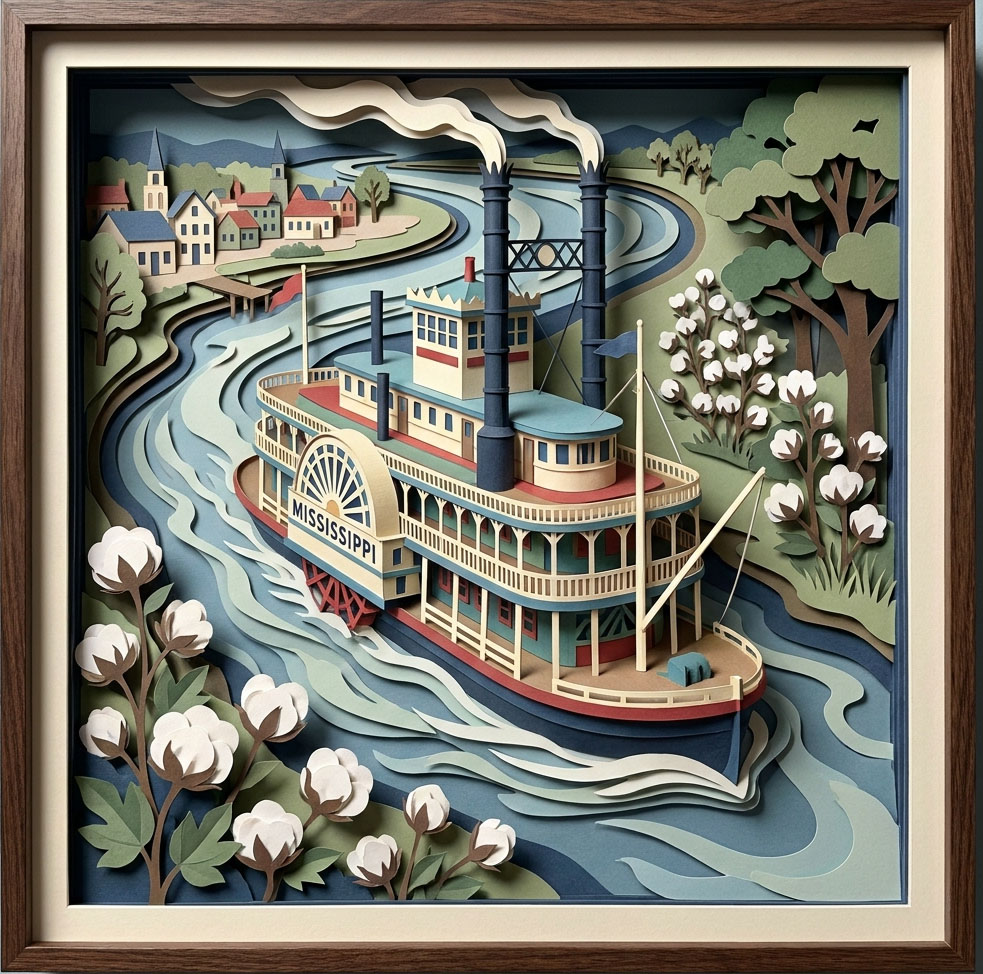
Steamboat
1807 · Robert Fulton
Founding Era
When Fulton's Clermont steamed up the Hudson River from New York City to Albany in 32 hours — a journey that took four days by sailboat against the current — it announced a new era in transportation. Steam power made rivers two-way highways for the first time, opening the American interior to commerce and migration at a pace impossible under sail. Within two decades, steamboats transformed the Mississippi River valley, making New Orleans one of the wealthiest cities in America.
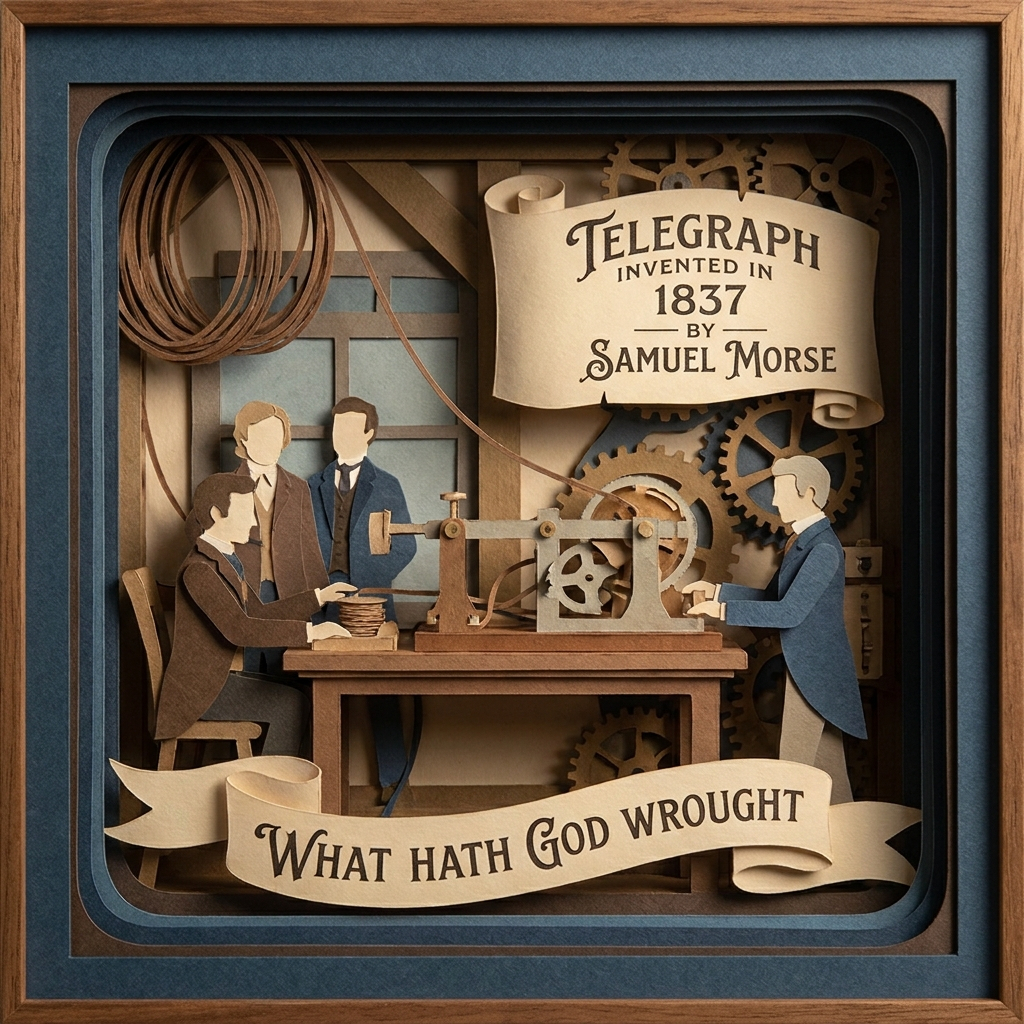
Telegraph
1837 · Samuel Morse
Industrial Era
Before the telegraph, news traveled only as fast as a horse or a ship. Morse's electrical telegraph changed that overnight: a message could cross a continent in minutes. The first official telegram — "What hath God wrought!" — was sent from Washington to Baltimore on May 24, 1844. By the Civil War, the telegraph had become a strategic military tool, allowing Lincoln to communicate with commanders in the field in near-real time. It was the first technology to separate communication from physical transportation.
"What hath God wrought!" — First telegraph message, May 24, 1844
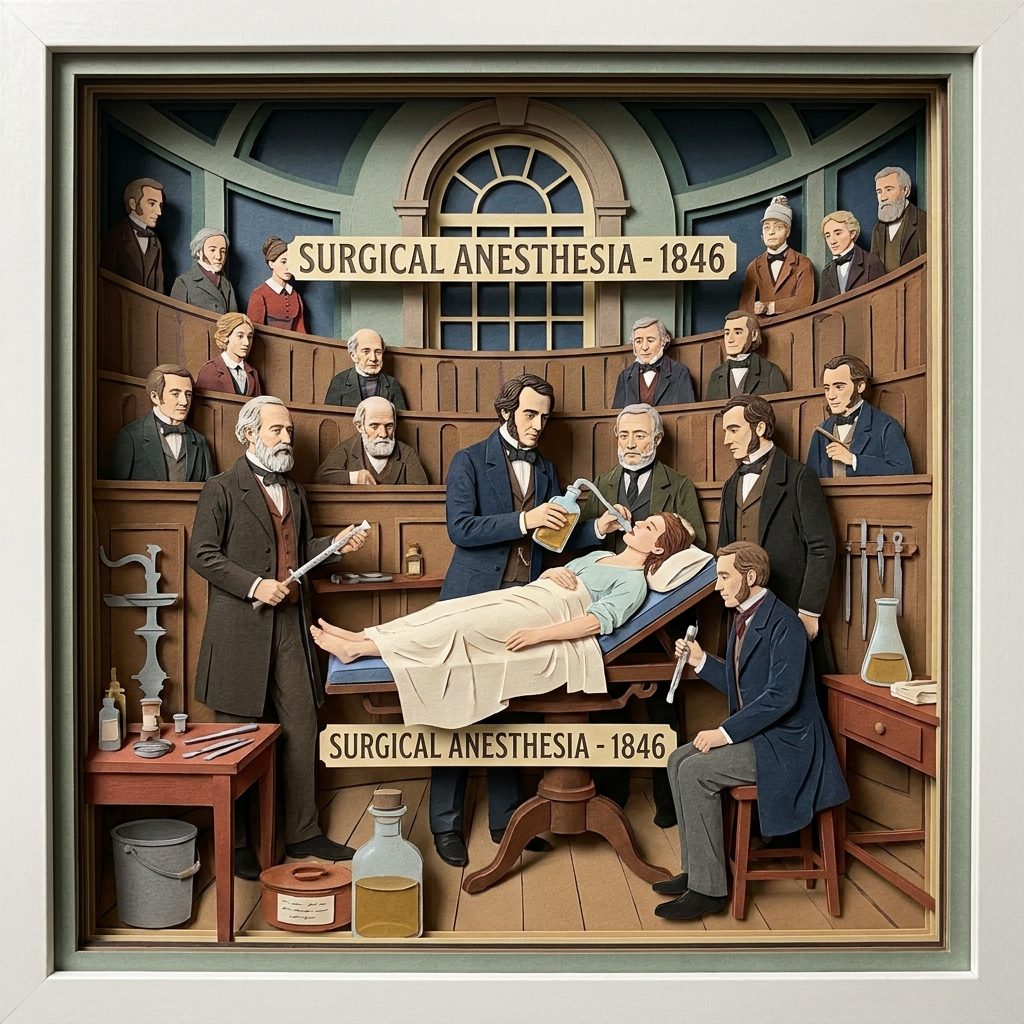
Surgical Anesthesia
1846 · William T.G. Morton
Industrial Era
Before 1846, surgery meant agony. On October 16, 1846, dentist William Morton demonstrated that ether vapor could render a patient unconscious and pain-free during an operation at Massachusetts General Hospital. The surgeon who performed the procedure turned to the audience and said: "Gentlemen, this is no humbug." Within months, the discovery had spread worldwide, transforming surgery from a last resort into a viable medical intervention. The operating theater at MGH where it happened is still known as the Ether Dome.
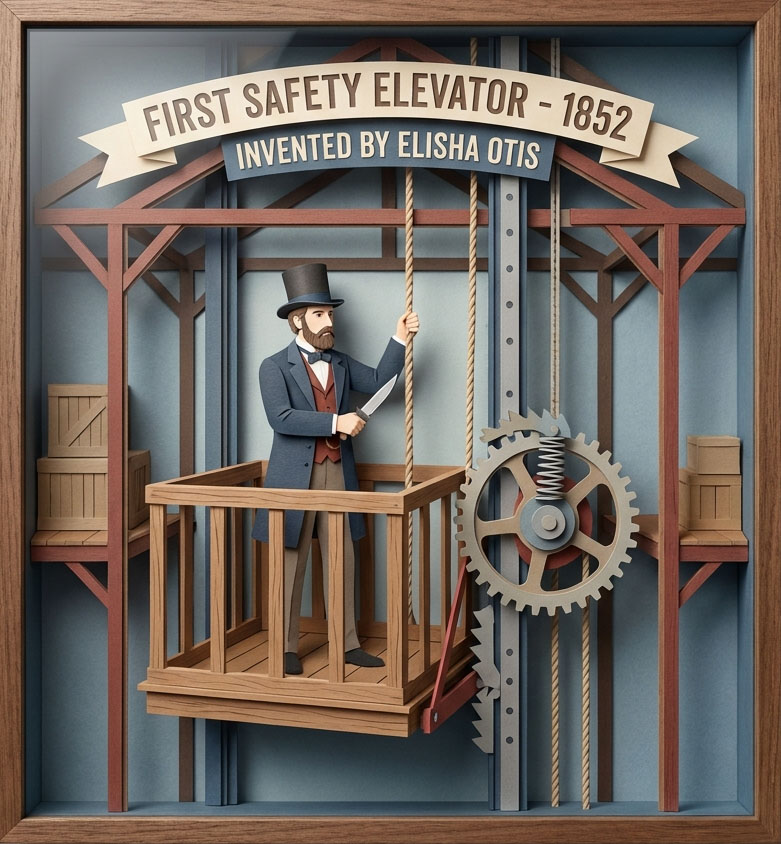
Safety Elevator
1852 · Elisha Otis
Industrial Era
Elevators existed before Otis, but they were dangerous: if the hoisting rope broke, the car fell. Otis invented a safety mechanism that automatically engaged if the rope snapped, locking the car in place. He demonstrated it dramatically at the 1854 Crystal Palace Exposition in New York, cutting the rope himself while standing in the car. The crowd gasped — and then saw the safety brake hold. His invention made the skyscraper possible and remade the vertical shape of modern cities.
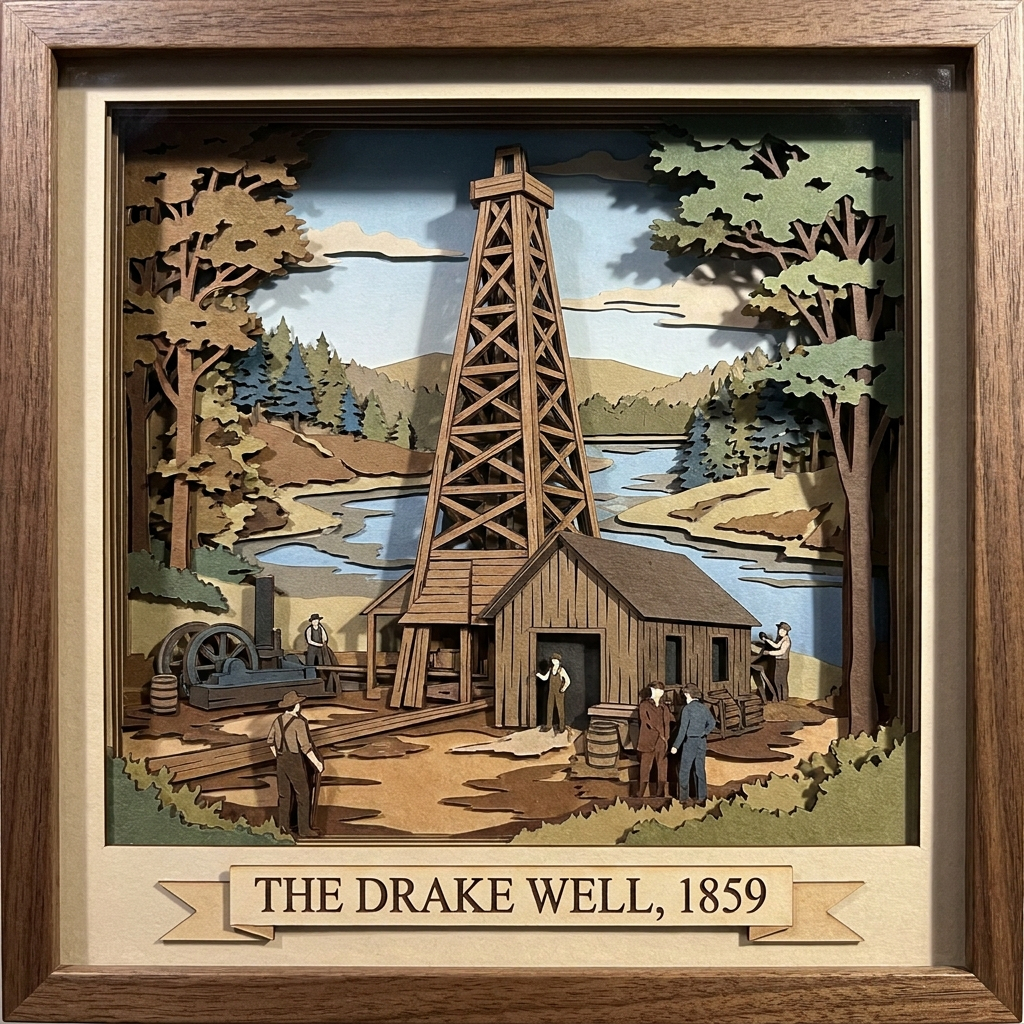
Oil Drilling
1859 · Edwin Drake
Industrial Era
Drake's Folly, as skeptics called it, struck oil at 69.5 feet in Titusville, Pennsylvania, on August 27, 1859 — the first commercially successful oil well in America. The technique of using iron pipe casing to drive through rock and prevent borehole collapse became the template for oil drilling worldwide. The Pennsylvania oil fields that followed supplied kerosene for lighting to much of the world, launched the petroleum industry, and set in motion the energy economy that shaped the 20th century.
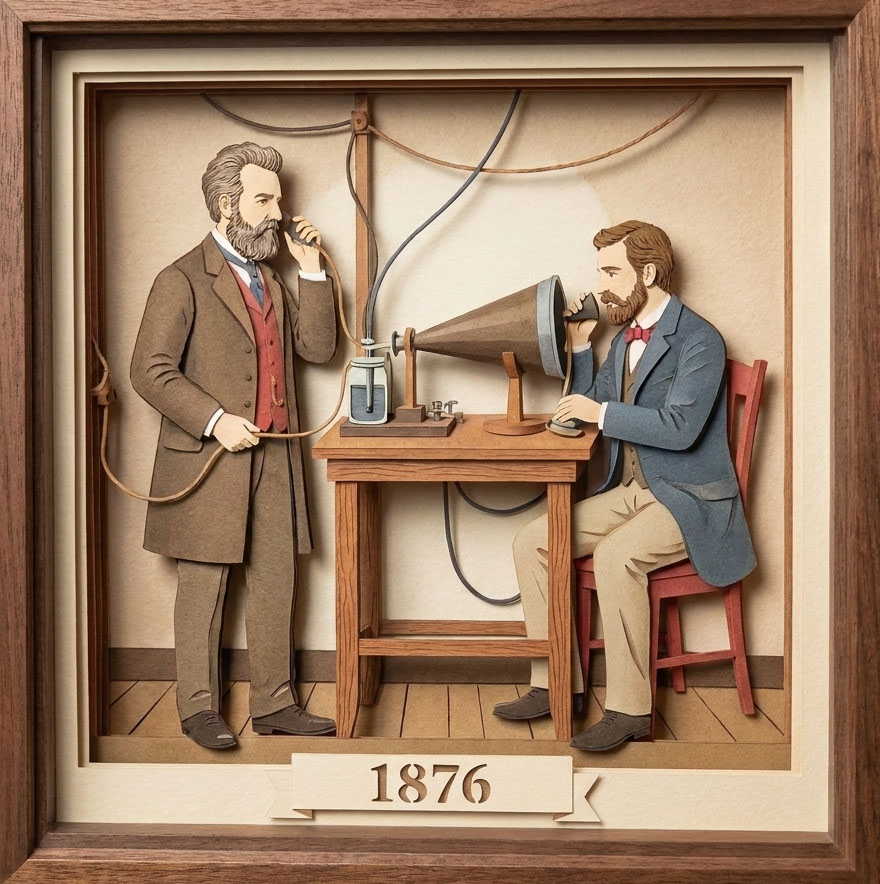
Telephone
1876 · Alexander Graham Bell
Industrial Era
On March 10, 1876, Bell spoke the first intelligible words transmitted by telephone: "Mr. Watson, come here — I want to see you." The telephone took the telegraph's ability to send information at the speed of electricity and added the human voice, transforming communication from coded dots and dashes into natural conversation. Within Bell's lifetime, telephone lines connected every major city in America. Within a century, the phone became so fundamental to daily life that its absence felt unthinkable. The iPhone is its direct descendant.
"Mr. Watson, come here — I want to see you." — Alexander Graham Bell, March 10, 1876
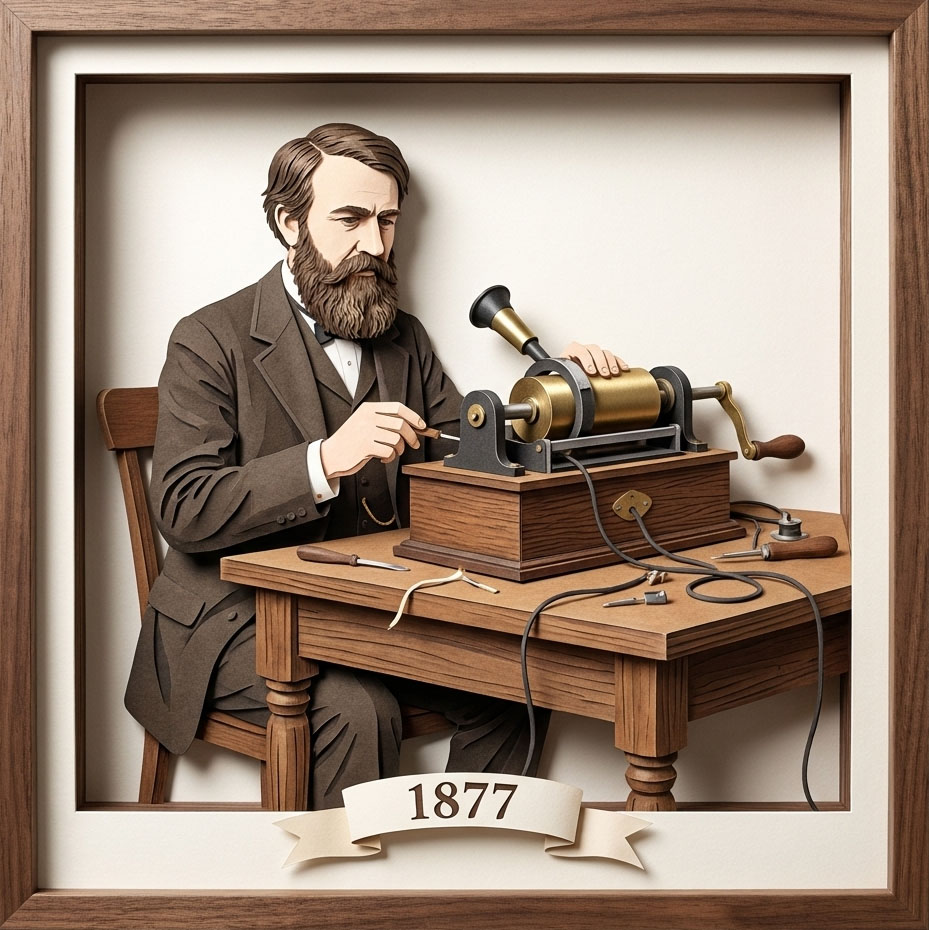
Phonograph
1877 · Thomas Edison
Gilded Age
Edison's phonograph was the first device to record and play back sound, and it astonished the world. When Edison recited "Mary Had a Little Lamb" into a tinfoil cylinder and played it back, even he was startled it worked. The implications were enormous: for the first time in human history, a performance could be preserved after the performer was gone. The phonograph gave birth to the recorded music industry, changed how people experienced culture, and made possible every format that followed — from the LP to the MP3.
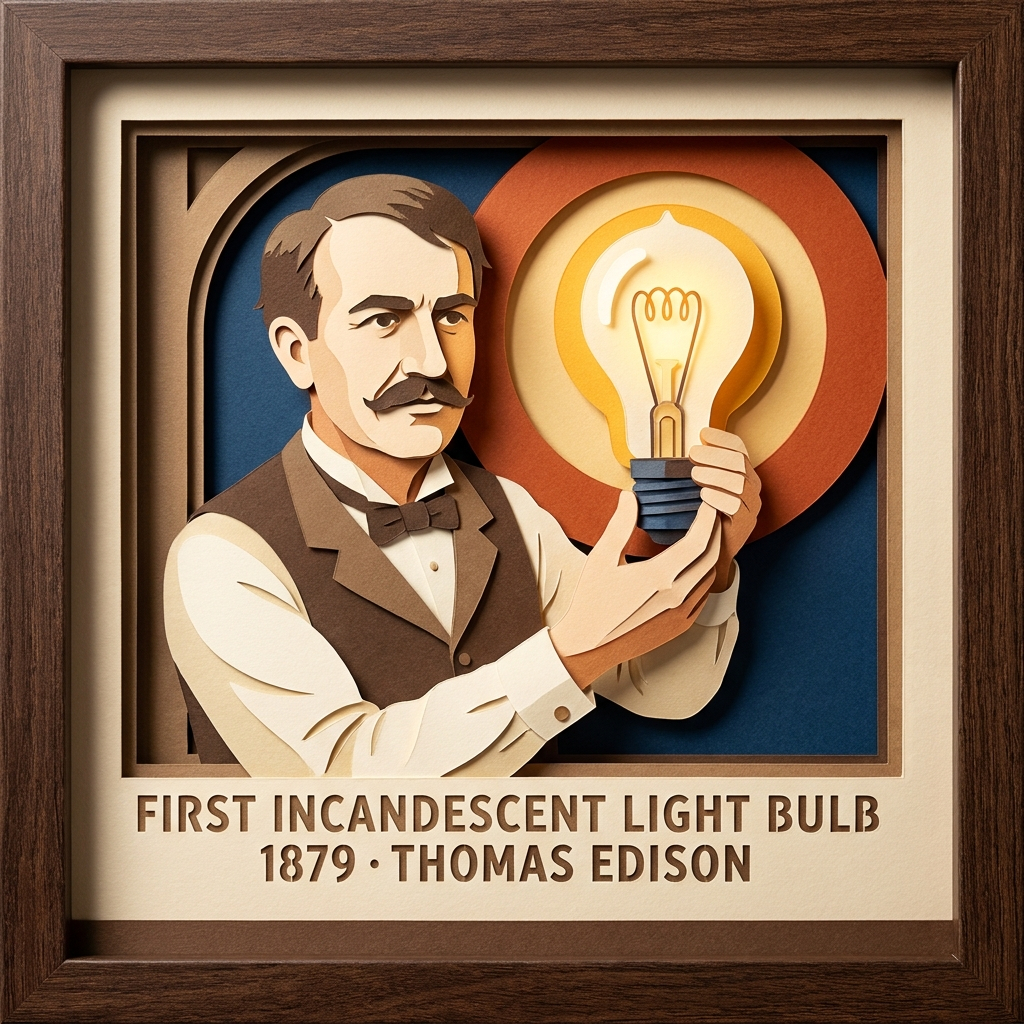
Incandescent Light Bulb
1879 · Thomas Edison
Gilded Age
Edison's genius was less the bulb itself than the complete electrical system he designed around it: generators, transmission lines, meters, and switches that could bring reliable electric light into homes and businesses. His Pearl Street Station in lower Manhattan, opened in 1882, powered 85 buildings with 400 lamps and demonstrated that electricity could be delivered as a utility. The light bulb became the universal symbol of the idea itself — and Edison's integrated approach to invention became the model for the industrial research laboratory.
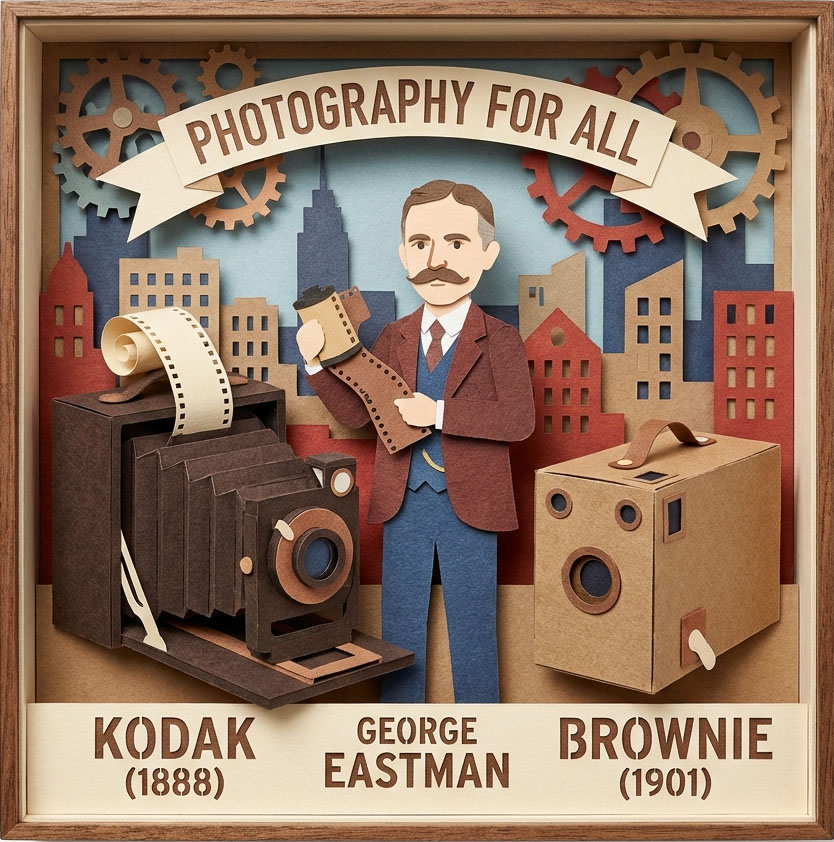
Roll Film & the Kodak Camera
1888 · George Eastman
Gilded Age
Before George Eastman, photography belonged to professionals willing to haul heavy glass plates and portable darkrooms. His flexible roll film (1884) and the first Kodak camera (1888) changed that entirely. Buyers mailed the loaded camera to Eastman's Rochester factory; it came back developed and reloaded. "You press the button, we do the rest." Eastman had democratized photography — the snapshot and the family album were now within reach of anyone. Kodak dominated global film for a century, and Eastman gave away the equivalent of more than $2 billion before his death in 1932.
"You press the button, we do the rest." — Kodak advertising slogan, 1888
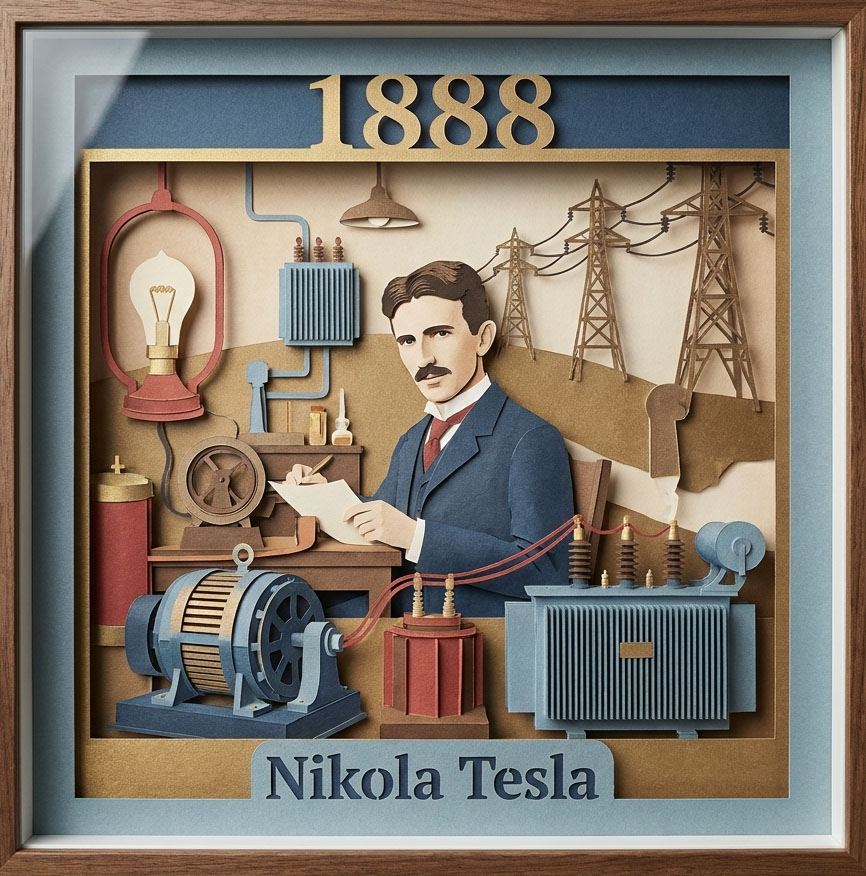
AC Power System
1888 · Nikola Tesla
Gilded Age
Tesla's alternating current motor and the AC power distribution system he developed with George Westinghouse solved the fundamental problem of Edison's DC system: power couldn't travel far without severe losses. AC current could be stepped up to high voltage for transmission and stepped back down for use, making it possible to generate electricity at a central plant and distribute it across a city or region. The "War of Currents" between Edison and Westinghouse ended at Niagara Falls in 1895, when Tesla's AC system lit Buffalo, New York — from 26 miles away.
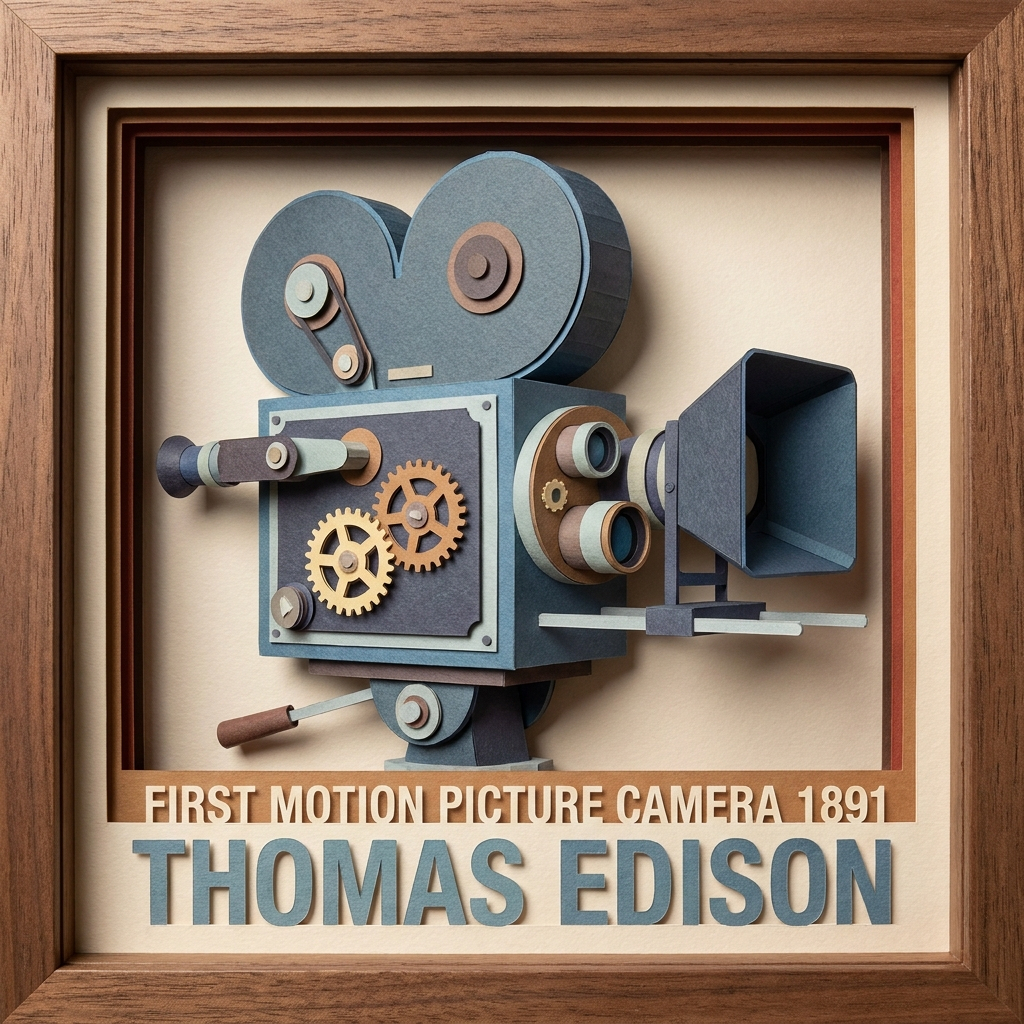
Motion Picture Camera
1891 · Thomas Edison / William Dickson
Gilded Age
Edison's laboratory produced the Kinetoscope — a device for viewing short moving-picture loops through a peephole — and the Kinetograph camera that shot them, giving rise to the film industry. Within a decade, projected movies were playing in nickleodeons across America. The Lumière brothers in France advanced the technology independently, but it was the American film industry — centered in Hollywood by the 1910s — that turned motion pictures into the dominant popular art form of the 20th century.
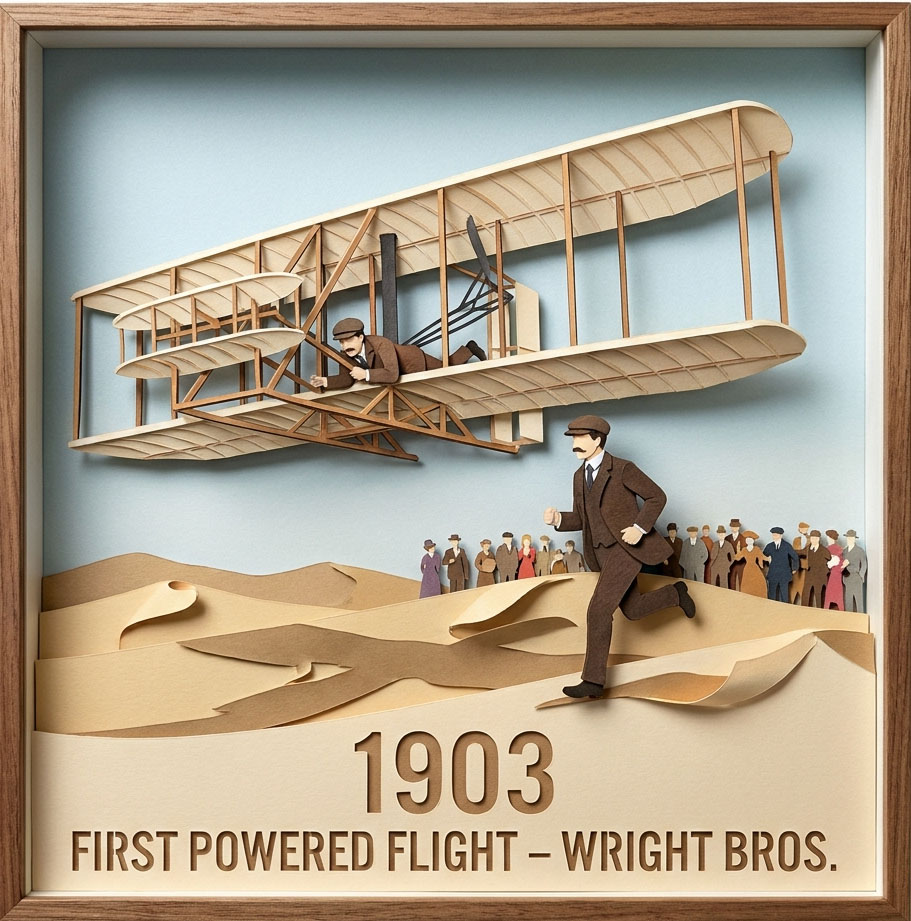
Powered Flight
1903 · Orville & Wilbur Wright
Gilded Age
At 10:35 a.m. on December 17, 1903, at Kitty Hawk, North Carolina, Orville Wright flew 120 feet in 12 seconds. It was the first sustained, controlled, powered heavier-than-air flight in history. The Wright Brothers succeeded where lavishly funded government projects failed because they thought systematically — they built a wind tunnel, tested wing shapes with scientific precision, and designed their own lightweight engine. In 66 years, their 12-second flight became the Apollo 11 moon landing.
"Success. Four flights Thursday morning... the age of the flying machine had come at last." — Orville Wright, telegram, December 17, 1903
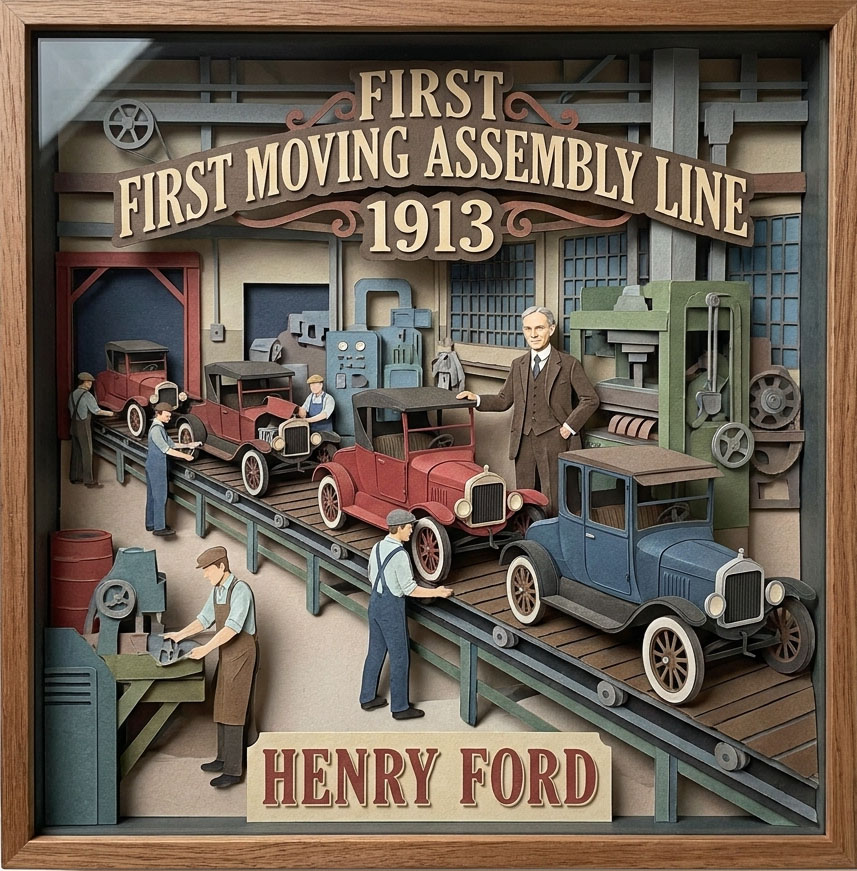
Moving Assembly Line
1913 · Henry Ford
Gilded Age
Ford's Highland Park plant introduced the moving assembly line for the Model T in 1913, reducing the time to build a car from over 12 hours to 93 minutes. Within two years, Ford was producing more cars than all other manufacturers combined, and the price had fallen so far that factory workers could buy what they made. The assembly line became the organizing principle of industrial production worldwide, and its logic — standardization, specialization, continuous flow — reshaped everything from food processing to hospital care.
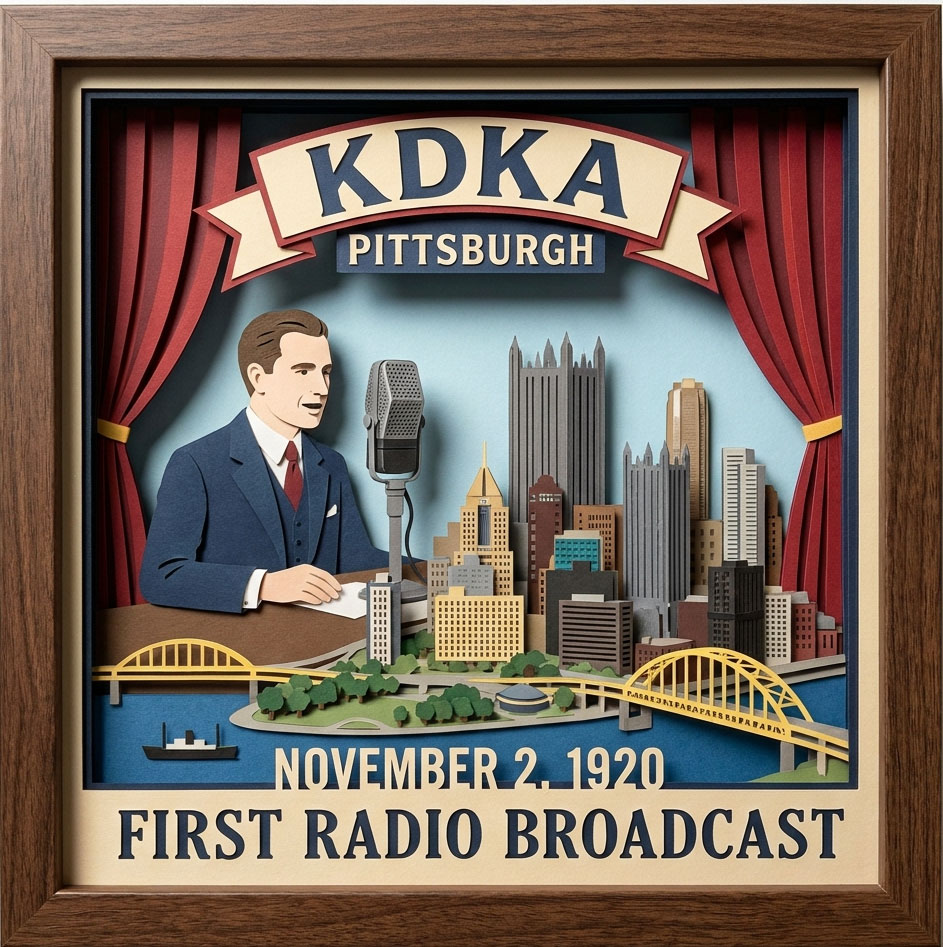
Radio Broadcasting
1920 · KDKA Pittsburgh
Gilded Age
When KDKA in Pittsburgh broadcast the returns of the 1920 presidential election on November 2, 1920 — the first scheduled commercial radio broadcast in the United States — it launched an industry that would rewire American culture. By the 1930s, radio had created the first truly national shared experience: the same news, music, comedy, and drama reaching tens of millions of homes simultaneously. FDR's Fireside Chats used radio to speak directly to Americans in crisis; Hitler used it to consolidate power. No technology since the printing press had such an immediate cultural impact.
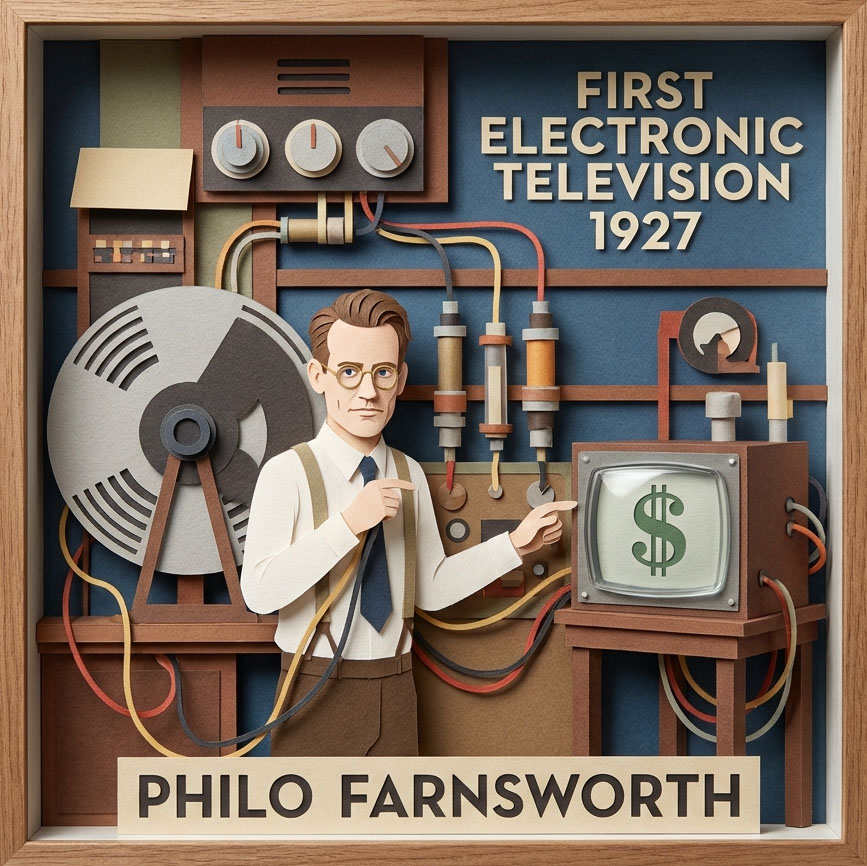
Electronic Television
1927 · Philo Farnsworth
Modern Era
A 21-year-old Idaho farm boy named Philo Farnsworth transmitted the first all-electronic television image — a simple horizontal line — in his San Francisco laboratory on September 7, 1927. He had conceived the idea at age 14, while plowing a potato field and seeing the parallel furrows as rows of scanning electrons. RCA's David Sarnoff tried to buy his patents and, failing that, to invalidate them; Farnsworth prevailed in court. Television became the dominant medium of the 20th century, shaping politics, culture, and daily life in ways that are still unfolding.
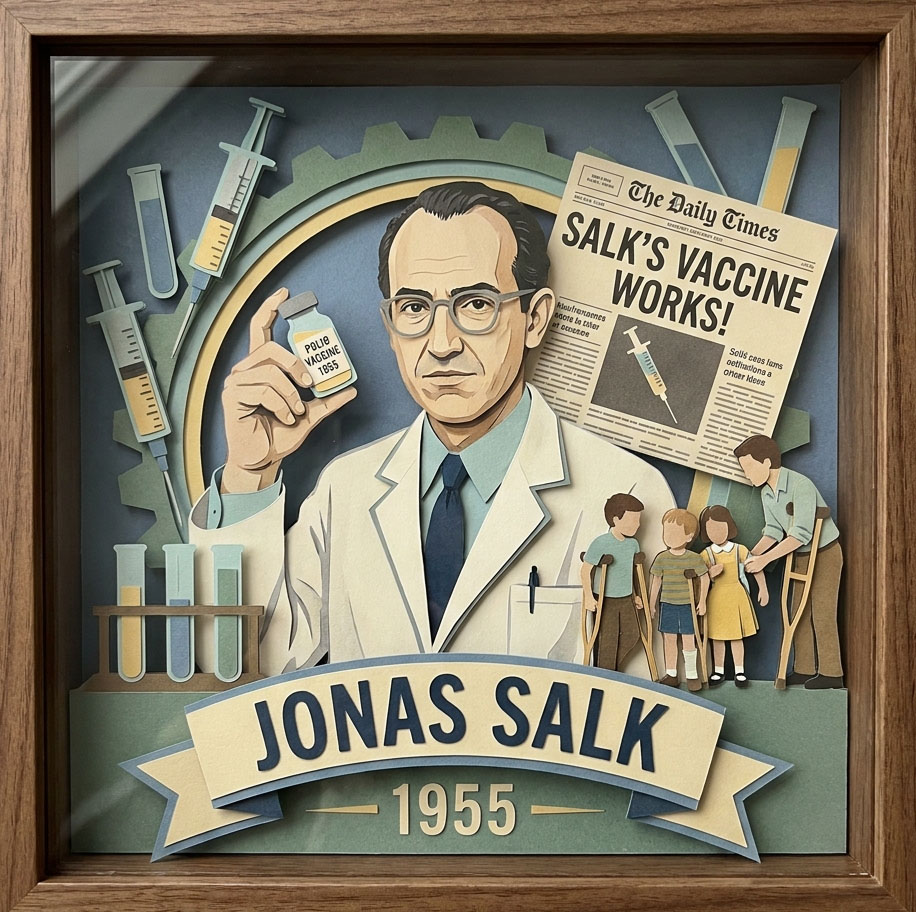
Polio Vaccine
1955 · Jonas Salk
Modern Era
In the summer of 1952, nearly 58,000 Americans contracted polio; more than 3,000 died and thousands more were paralyzed. Jonas Salk's killed-virus vaccine, announced on April 12, 1955 — the tenth anniversary of FDR's death — was immediately declared safe and effective. People wept in the streets. Church bells rang. Salk famously refused to patent the vaccine, asking "Could you patent the sun?" The Salk vaccine and Albert Sabin's subsequent oral vaccine essentially eliminated polio from the Western Hemisphere.
"Who owns my polio vaccine? The people. Could you patent the sun?" — Jonas Salk
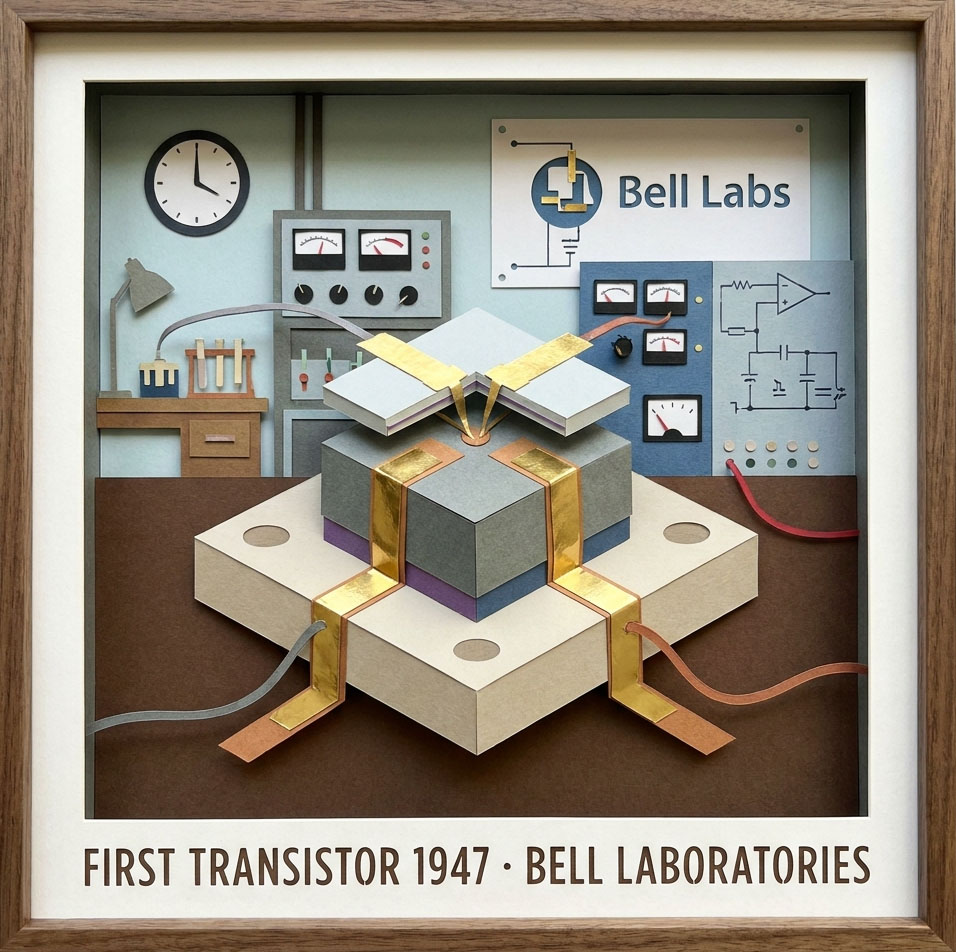
Transistor
1947 · Bell Laboratories
Modern Era
William Shockley, John Bardeen, and Walter Brattain at Bell Labs invented the transistor in December 1947, replacing the bulky, power-hungry vacuum tube with a solid-state semiconductor device that could switch and amplify electrical signals. The transistor made everything smaller, cheaper, cooler, and more reliable. It is the fundamental building block of modern electronics: the integrated circuit, the microprocessor, the smartphone, and every digital device on earth are refinements of the transistor. The three inventors shared the 1956 Nobel Prize in Physics.
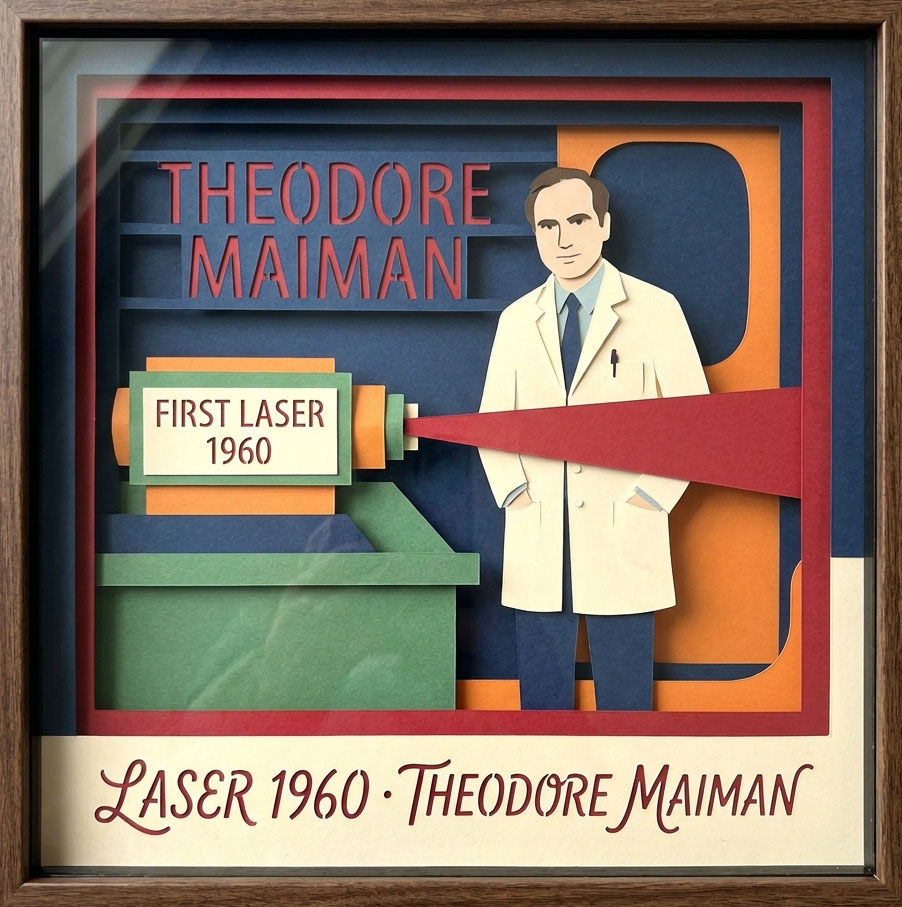
Laser
1960 · Theodore Maiman
Modern Era
Theodore Maiman fired the first laser on May 16, 1960, using a synthetic ruby crystal and a photographic flash lamp in his Hughes Research Laboratories workshop in Malibu, California. The device was called "a solution in search of a problem" — until the applications arrived: laser surgery, fiber-optic communications, barcode scanners, CD and DVD players, precision manufacturing, LIDAR mapping, and nuclear fusion research. The laser is among the most versatile tools humanity has ever created, and its uses continue to expand.
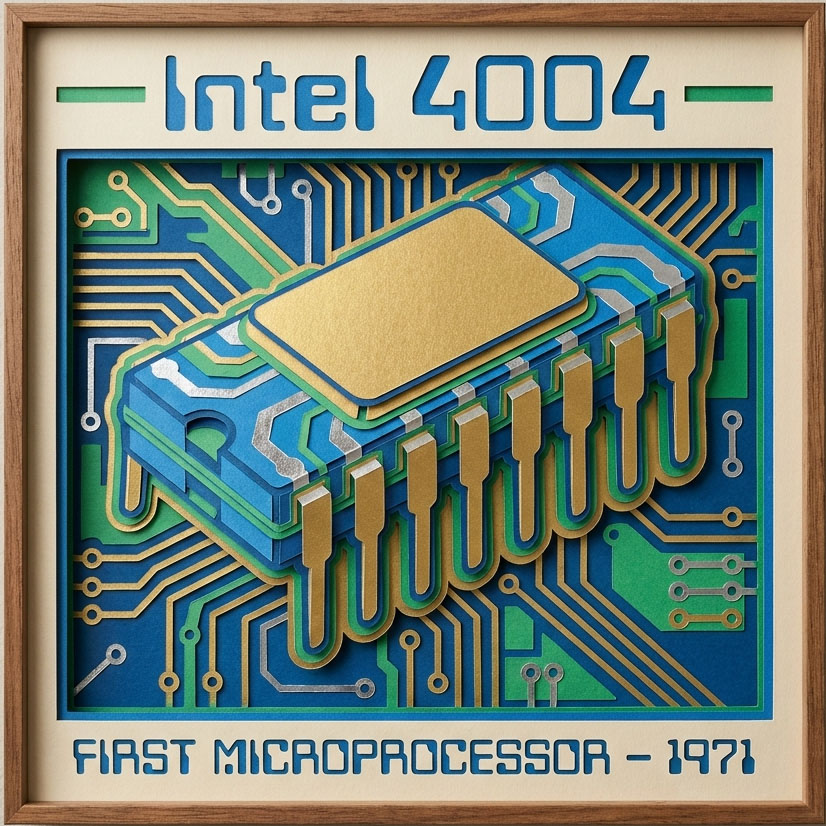
Microprocessor
1971 · Intel
Modern Era
Intel's 4004, introduced in November 1971, placed an entire central processing unit on a single chip the size of a fingernail — the first commercially available microprocessor. Designed by Federico Faggin, Ted Hoff, and Stanley Mazor, it contained 2,300 transistors and delivered the same computing power as ENIAC, a room-sized computer from 1945. The microprocessor democratized computing, eventually putting more processing power in a wristwatch than existed in the entire world in 1971. It is the engine of the digital age.
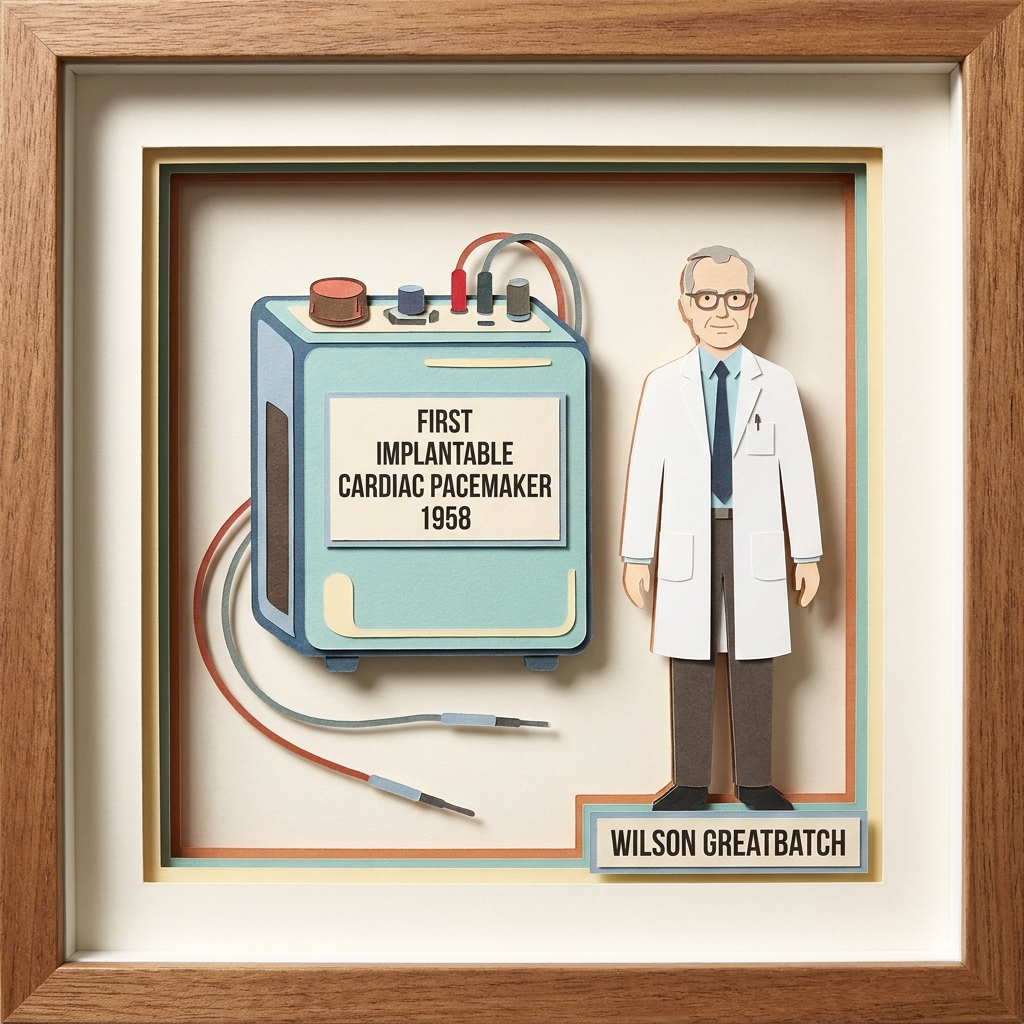
Implantable Cardiac Pacemaker
1958 · Wilson Greatbatch
Modern Era
Wilson Greatbatch accidentally installed the wrong resistor in a heart-rhythm recording device he was building in his barn in Clarence, New York — and discovered that the resulting circuit produced a rhythmic electrical pulse perfect for stimulating a human heart. He spent the next two years miniaturizing the device and improving its power source. In 1960, the first patient received a Greatbatch pacemaker implanted by surgeon William Chardack; the patient lived 18 more years. More than a million pacemakers are implanted worldwide each year, and the device has saved tens of millions of lives.
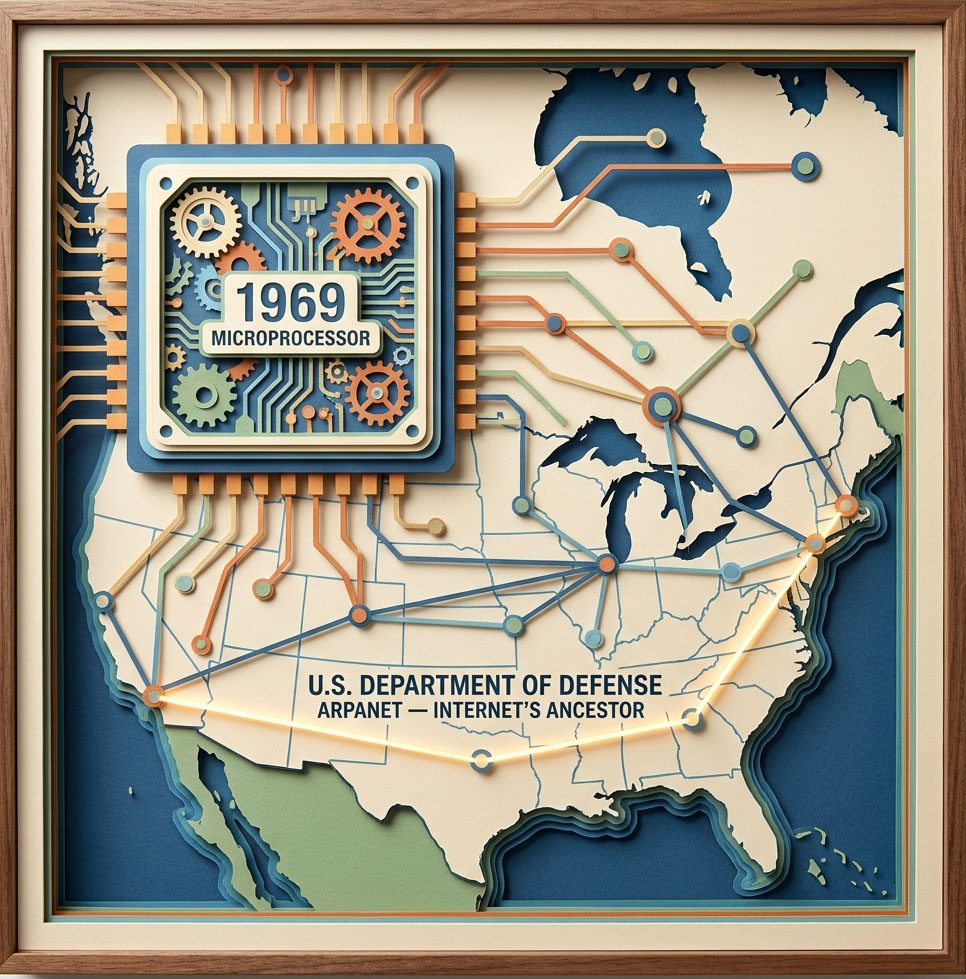
ARPANET / The Internet
1969 · U.S. Department of Defense
Modern Era
On October 29, 1969, the first message was sent over ARPANET — the experimental Defense Department network that became the internet's ancestor. The message was "lo," because the system crashed after the first two letters of "login." The underlying concept — packet switching, where data is broken into chunks routed independently across a network — was developed by American researchers Paul Baran and Vint Cerf, among others. ARPANET grew into the internet, the most consequential communications infrastructure in human history.
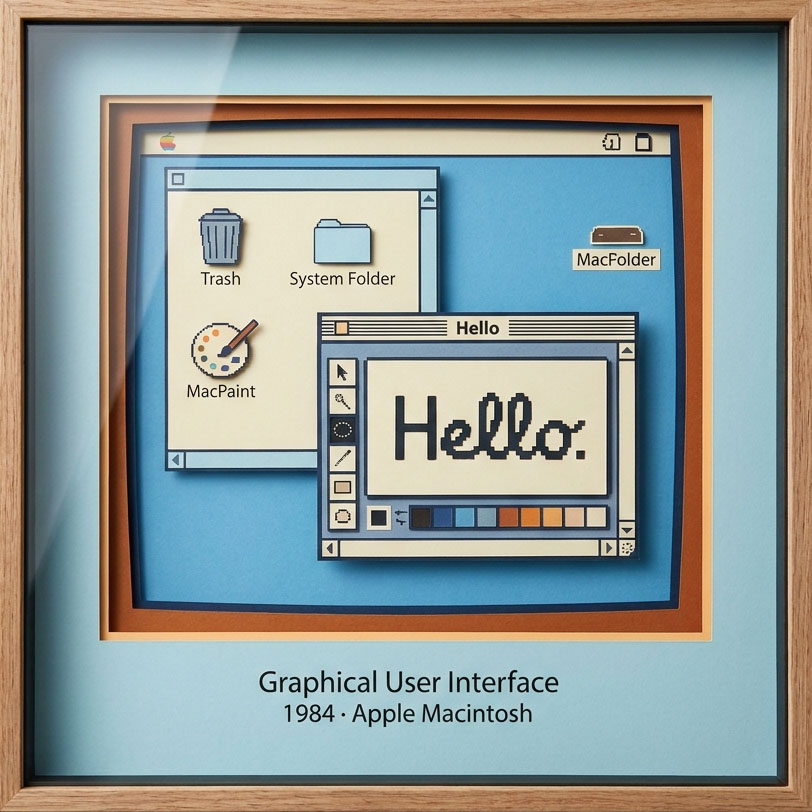
Graphical User Interface
1984 · Apple Macintosh
Digital Age
Xerox PARC's researchers invented the graphical user interface — windows, icons, a mouse, a desktop metaphor — but it was Apple that put it in the hands of ordinary people with the 1984 Macintosh. Before the GUI, computers required users to memorize arcane command-line syntax. Afterward, anyone could learn to use a computer intuitively. The GUI made personal computing genuinely personal, and Steve Jobs' obsession with design as a function of usability became the template for consumer technology for the next four decades.
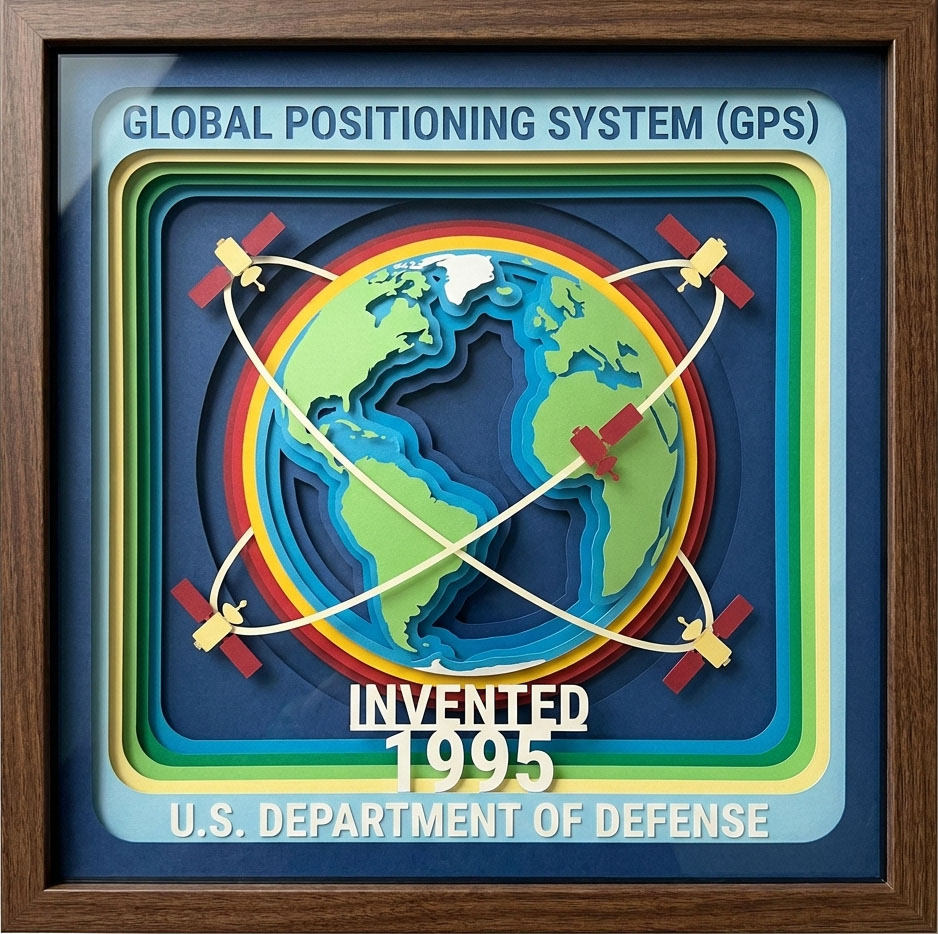
Global Positioning System (GPS)
1995 · U.S. Department of Defense
Digital Age
Developed by the U.S. military beginning in the 1970s and declared fully operational in 1995, GPS uses a constellation of 24 satellites to provide precise location data anywhere on earth. When President Clinton ordered military accuracy restrictions removed in 2000, GPS became commercially revolutionary: navigation apps, ride-sharing, package tracking, precision agriculture, drone delivery, autonomous vehicles, and emergency response all depend on it. GPS is among the most generous technological gifts a government has ever given to the world — free to all, paid for by American taxpayers.
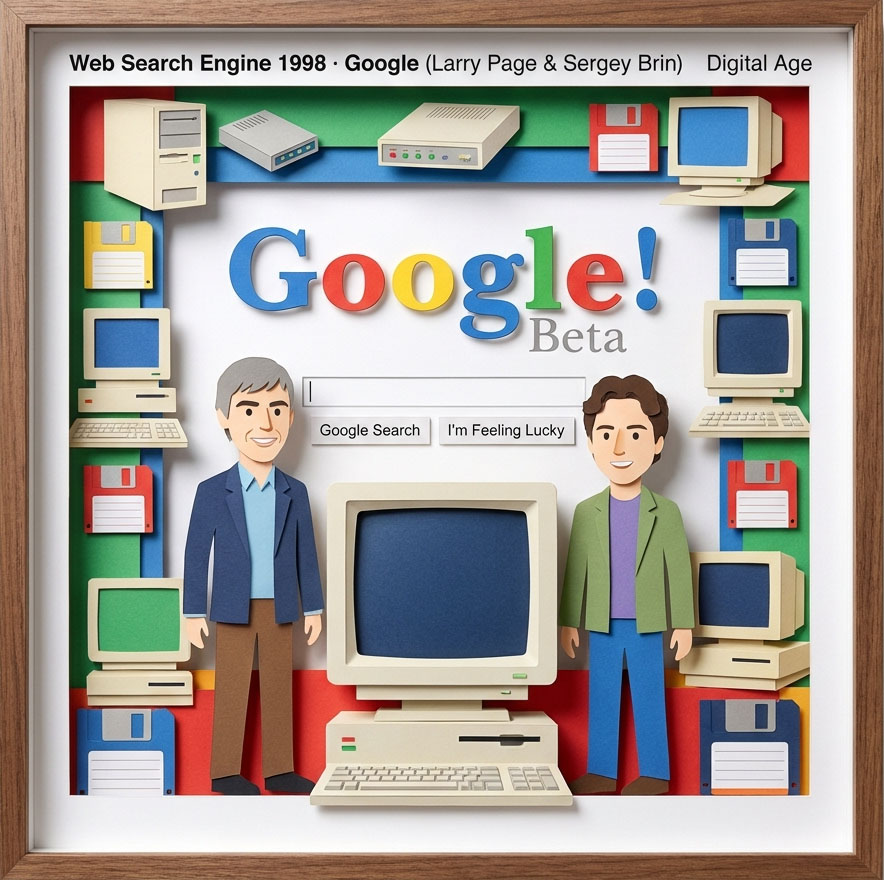
Web Search Engine
1998 · Google (Larry Page & Sergey Brin)
Digital Age
Page and Brin's PageRank algorithm — which ranked web pages by the number and quality of links pointing to them — turned the chaotic early web into a navigable library. Google's search engine, incorporated in 1998, did for information what the card catalog did for the library, and then rendered it obsolete. Today Google processes more than 8 billion searches per day, and the verb "to google" has entered dictionaries worldwide. The web search engine is the most-used software interface in history.
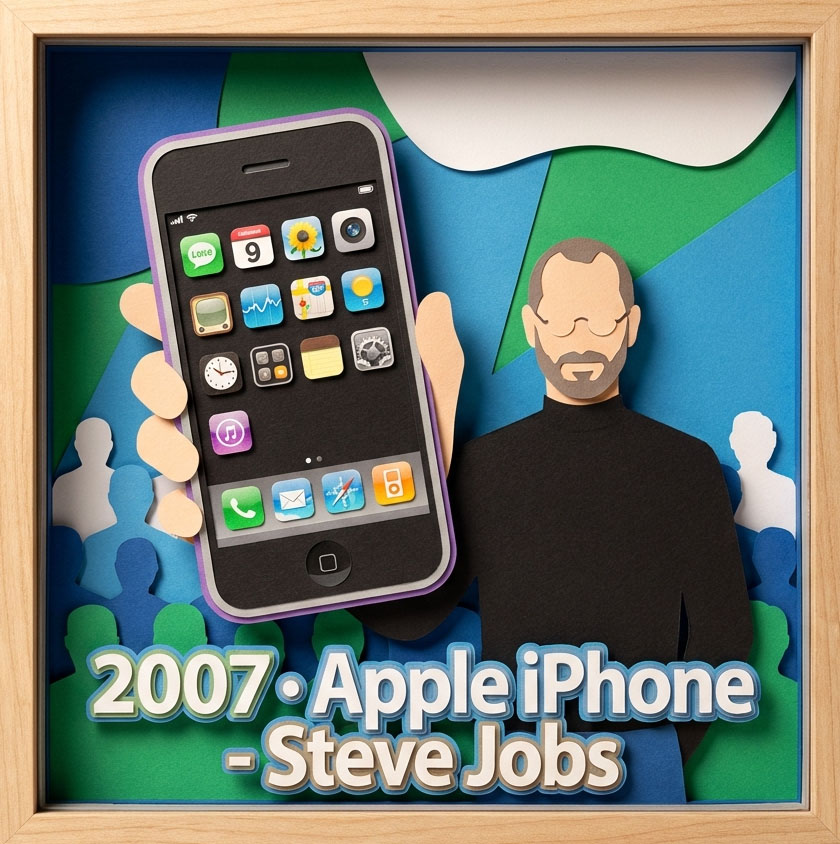
Smartphone
2007 · Apple iPhone
Digital Age
When Steve Jobs introduced the iPhone on January 9, 2007, he called it "an iPod, a phone, and an internet communicator" in one device — then paused for the audience to realize those weren't three separate products. The iPhone's capacitive touchscreen interface, App Store ecosystem, and integration of camera, GPS, and internet in a pocket-sized device remade daily life faster than any previous consumer technology. Within a decade, more than half of humanity carried a supercomputer in their pocket. The smartphone is the fastest-adopted technology in human history.
"Every once in a while a revolutionary product comes along that changes everything." — Steve Jobs, January 9, 2007
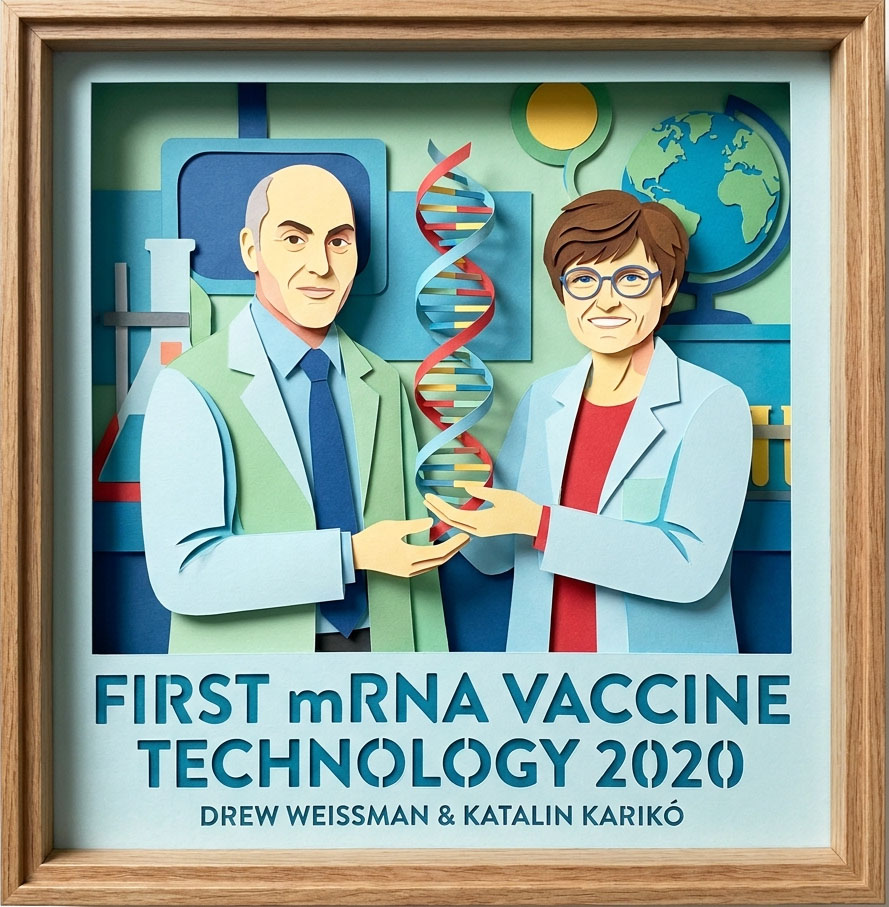
mRNA Vaccine Technology
2020 · Drew Weissman & Katalin Karikó
Digital Age
For decades, University of Pennsylvania researchers Drew Weissman and Katalin Karikó pursued the idea of using messenger RNA — the genetic instructions cells use to build proteins — as a medicine. Their crucial insight, that chemically modified mRNA could evade the immune system's defenses, made therapeutic mRNA viable. When COVID-19 struck in 2020, Moderna and Pfizer-BioNTech deployed mRNA vaccine platforms that had been in development for years, producing safe, effective vaccines in under a year. Weissman and Karikó received the 2023 Nobel Prize in Physiology or Medicine. The platform promises vaccines against cancer, HIV, and diseases that have resisted conventional approaches for generations.
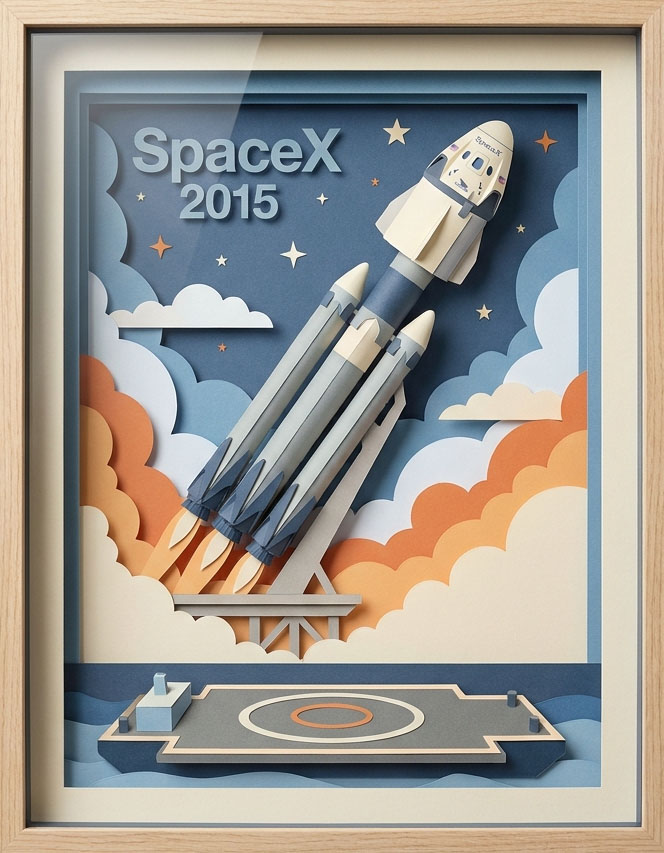
Reusable Orbital Rocket
2015 · SpaceX
Digital Age
On December 21, 2015, a SpaceX Falcon 9 booster returned from orbit and landed upright on a pad in Cape Canaveral, Florida — the first orbital-class rocket ever recovered intact. Before this moment, every orbital rocket in history had been discarded after one use, making space launch extraordinarily expensive. SpaceX's reusable boosters reduced the cost of reaching orbit by an order of magnitude, reopening the space frontier to commercial enterprise. The company has since launched and landed the same booster more than 20 times, and the race to make humanity multiplanetary has become commercially viable for the first time.